 Meet Qimei at PLMA Chicago 2026 · November 15–17, 2026 · Booth #H3029


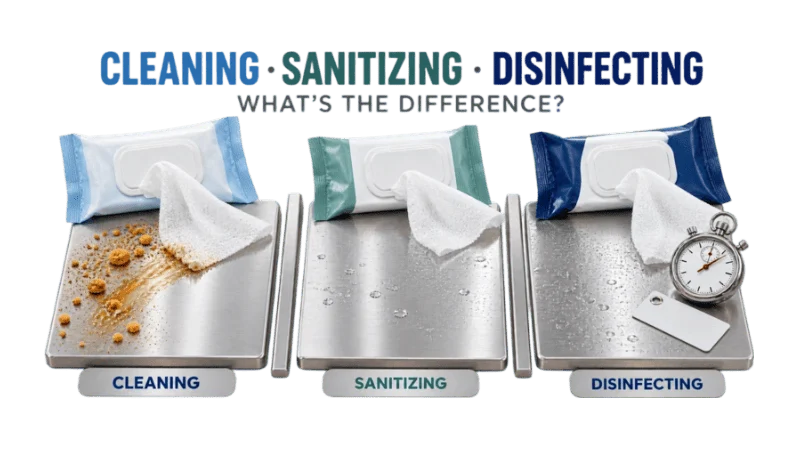
Cleaning, sanitizing and disinfecting are often used as if they mean the same thing. For wet wipes buyers, they do not.
The difference affects the formula, wet wipes raw material, testing, packaging text, production controls and market-entry requirements. A standard cleaning wipe may be suitable for everyday dirt and grease. A sanitizing or disinfecting wipe may need a different active system, specific efficacy evidence and regulated claims.
This distinction is especially important for private label wet wipes. A product name or pack design should never be approved before the intended claim, market and supporting evidence are clear.
This article focuses on hard-surface wipes, such as kitchen, household, institutional and commercial cleaning wipes. Skin wipes follow different safety and regulatory rules and should not be treated as surface disinfectants.
The Simple Difference
Here is the practical distinction:
| Product type | Main purpose | What it does | Typical use |
|---|---|---|---|
| Cleaning wipe | Remove soil and mess | Lifts dirt, grease and some germs from a surface | Counters, tables, appliances and daily cleaning |
| Sanitizing wipe | Reduce germs to a safe level | Reduces microorganisms after cleaning | Food-prep areas, selected high-touch surfaces and commercial settings |
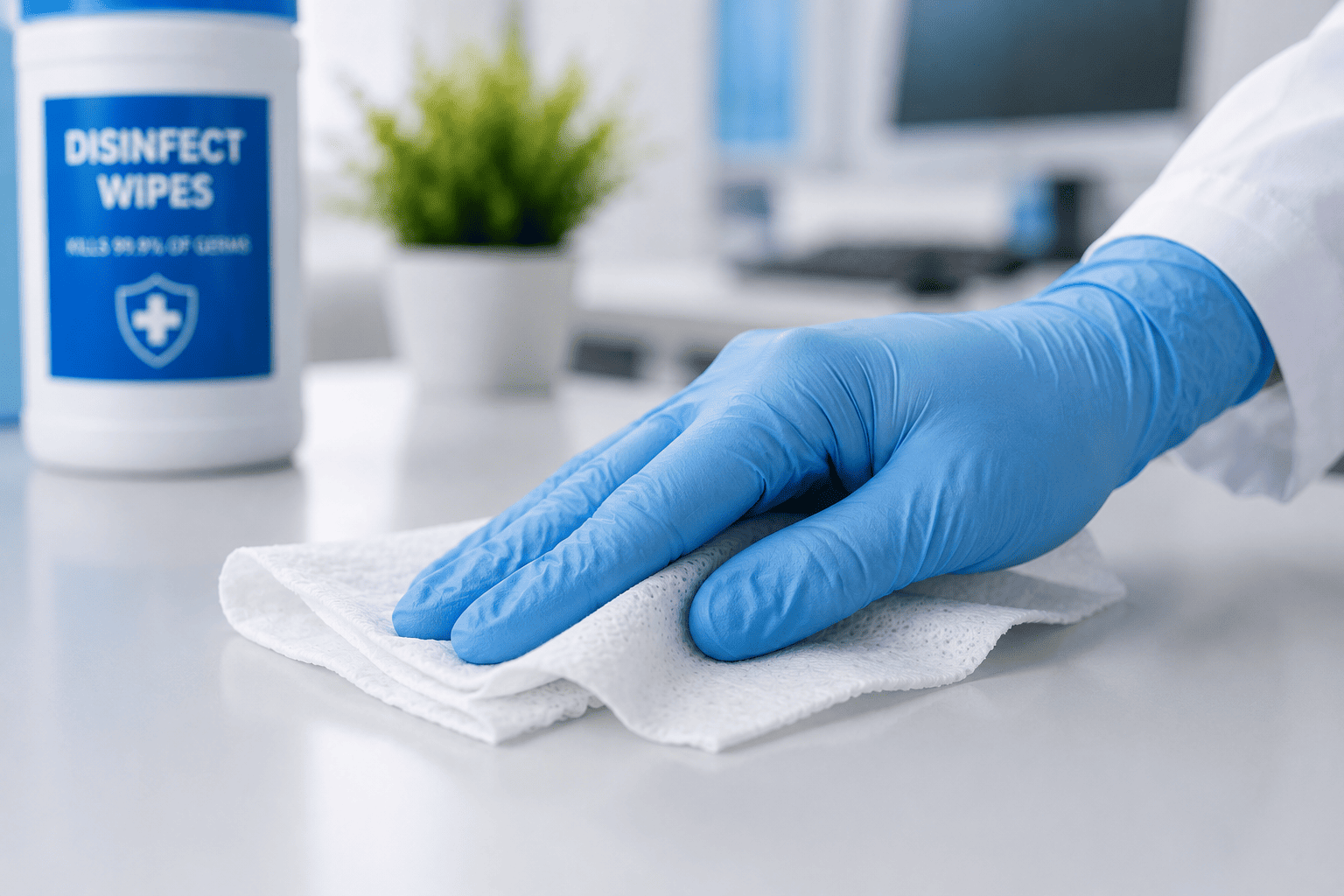
| Disinfecting wipe | Kill specified germs | Kills microorganisms named in the approved claim when used as directed | Higher-risk surfaces, healthcare, institutional or illness-related cleaning |
The U.S. Environmental Protection Agency explains that cleaning removes dirt and organic matter using soap or detergents. Sanitizing and disinfecting are antimicrobial actions regulated for surface products in the United States.
In plain language, cleaning removes the mess. Sanitizing reduces germs. Disinfecting is a stronger germ-control claim that depends on the product, its label directions and the test organisms covered.
What Is a Cleaning Wet Wipe?
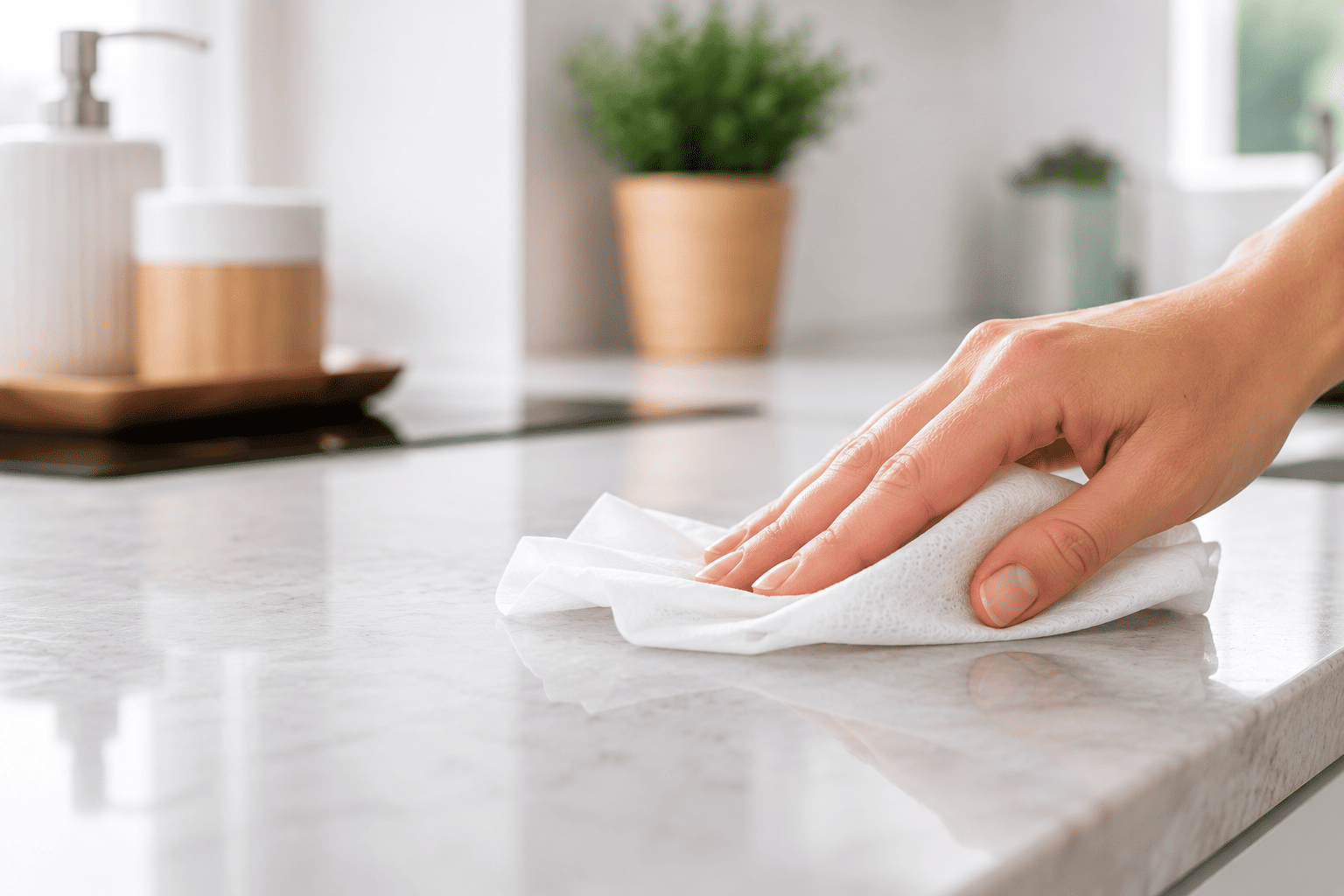
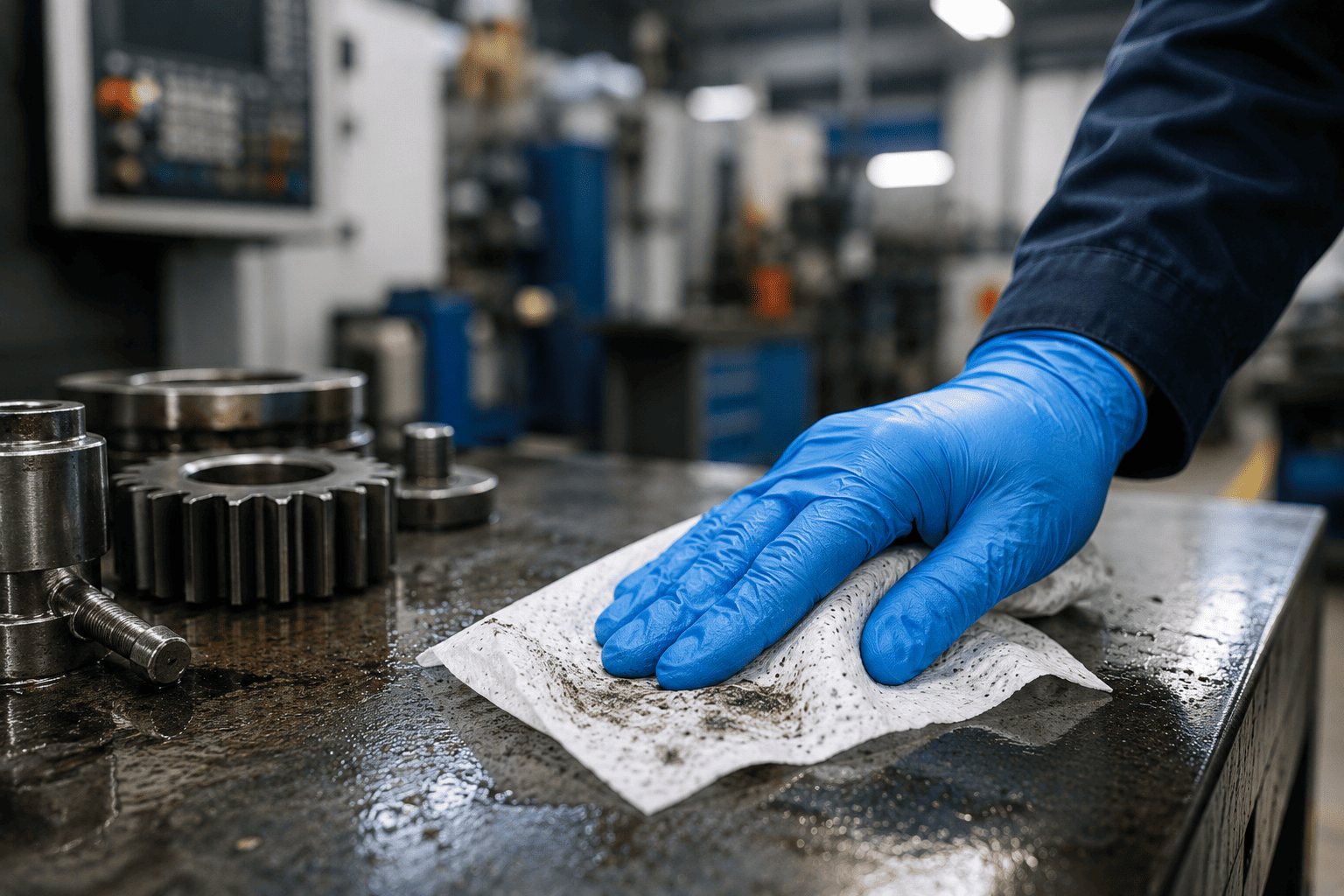
A cleaning wet wipe is designed to remove visible dirt, grease, dust, food residue and other soil from a surface.
Its formula may include water, surfactants, solvents, chelating agents, fragrance, preservatives and other ingredients selected for the cleaning job. The wipe itself may use spunlace, wood pulp blends, viscose, polyester/viscose or other nonwoven materials, depending on the required strength and absorbency.
A cleaning wet wipe does not automatically make an antimicrobial claim.
For example, a kitchen cleaning wipe may be developed to remove cooking oil from a worktop or fingerprints from an appliance. It may leave a fresh scent and clean appearance, but that does not mean it has been tested or approved to sanitize or disinfect the surface.
The U.S. Centers for Disease Control and Prevention states that cleaning with water, soap and scrubbing removes germs, dirt and impurities from surfaces. It also notes that, in many everyday situations, cleaning alone can remove most germs from surfaces.
For a Cleaning Wet Wipe Manufacturer, the product-development focus is usually:
- Cleaning power for the intended surface
- Grease removal and streak control
- Material strength and absorbency
- Fragrance or fragrance-free options
- Pack format and dispensing
- Surface compatibility
- Shelf life and moisture retention
This type of project is usually more straightforward than an antimicrobial wipe project because the buyer is not asking the product to make regulated germ-kill claims.
What Is a Sanitizing Wet Wipe?
A sanitizing wet wipe is designed to reduce microorganisms on a surface to a level considered safe under the applicable public-health standard or regulation.
In the U.S., EPA describes sanitizers as products used to reduce—not necessarily eliminate—microorganisms from the inanimate environment to levels considered safe. EPA also states that surface sanitizers are antimicrobial pesticides and require registration.
For hard surfaces, sanitizing commonly relates to bacteria. EPA notes that a surface sanitizer is not intended to kill viruses unless the product has the appropriate registered disinfecting claim.
A sanitizing wipe may be relevant for:
- Food-preparation areas after cleaning
- Commercial kitchens
- Foodservice equipment and non-porous surfaces
- Schools, childcare settings or public facilities
- High-touch surfaces where a sanitizing claim is appropriate
However, buyers should not assume that a formula with an antibacterial ingredient is automatically a compliant sanitizing wipe. The specific active ingredient, concentration, target organisms, contact time, test method and market authorization all matter.
A sanitizing wet wipe manufacturer should confirm the claim before making samples. “Sanitizing” is not just a stronger marketing phrase than “cleaning.” It changes the product-development and compliance path.
What Is a Disinfecting Wet Wipe?
A disinfecting wet wipe is intended to kill specified germs on non-living surfaces when it is used according to the approved label.
EPA defines disinfectants as products used on non-living surfaces and objects to destroy or irreversibly inactivate infectious fungi and bacteria, though not necessarily bacterial spores.
EPA also explains that disinfecting products face a higher efficacy-testing bar than sanitizing products. A product can be registered as both a sanitizer and disinfectant when it has been tested using the relevant methods.
For a disinfecting wet wipe, the claim is central. A buyer may want to claim effectiveness against bacteria, viruses, fungi or a defined list of microorganisms. Each claim needs to match the test data and local regulatory position.
The product also has to be used correctly. The surface may need to be cleaned first, and it must remain visibly wet for the stated contact time. If the wipe dries too quickly, the consumer does not use enough liquid, or the surface is heavily soiled, the expected result may not be achieved.
This means a Disinfecting Wet Wipe Manufacturer needs to consider more than the active ingredient. The formula, liquid loading, nonwoven release, wipe size, pack seal and consumer instructions all influence real use.
Why Cleaning Usually Comes First
Cleaning, sanitizing and disinfecting are not always alternatives. They can be sequential steps.
Dirt, grease and organic residue can make it harder for a sanitizing or disinfecting chemistry to contact microorganisms on a surface. CDC therefore advises cleaning surfaces before sanitizing or disinfecting them.
For buyers, this creates two possible product strategies:
- Develop a dedicated cleaning wipe for routine soil and grease removal.
- Develop a separate sanitizing or disinfecting wipe for use after cleaning where the claim is required.
Some products may contain both cleaning agents and antimicrobial actives. However, this does not remove the need for testing or authorization. A “2-in-1” claim must still be supported by the finished product’s evidence and approved usage directions.
“Antibacterial” Is Not a Simple Claim
“Antibacterial” is a common phrase in the wipes market, but it can be unclear.
Does it mean the wipe removes bacteria physically? Does it mean the formula reduces bacteria? Does it mean it kills bacteria on a hard surface? Does it refer to the product itself rather than the treated surface?
These are not interchangeable claims.
For this reason, private label buyers should avoid approving broad phrases such as:
- Antibacterial
- Kills germs
- Sanitizes
- Disinfects
- Eliminates viruses
- Hospital grade
- Food-safe disinfectant
unless the supplier can confirm the intended claim, the target surface, the active ingredient, the test scope, the contact time and the applicable market requirement.
A strong product claim can help branded wet wipes stand out. But an unsupported claim can create retailer, regulatory and reputational risk.
What Changes During Wet Wipes Manufacturing?
The difference between a cleaning wipe and a disinfecting wipe affects the whole wet wipes manufacturing process.
Formula Development
A standard cleaning wipe may focus on detergency, grease removal, fragrance and surface finish.
A sanitizing or disinfecting wipe may require a registered active system and careful formula compatibility. Surfactants, solvents, pH, fragrance and preservative choices can affect product stability and antimicrobial performance.
Wet Wipes Raw Material
The nonwoven must be compatible with the formula. It must absorb and release enough liquid while remaining strong during use.
Some active systems may interact with fibers or packaging materials. A material that works well with a basic cleaning formula may not perform the same way with an antimicrobial formula.
Liquid Loading
The wipe needs enough liquid to wet the surface for the required contact time. Too little liquid can make the product less effective in real use. Too much liquid can cause leakage, dripping, poor dispensing or a swollen pack.
Packaging
Packaging film, seals, lids and labels must be compatible with the formula. Some formulas require stronger barrier performance or more robust packaging components.
This is why custom printed wet wipes manufacturers and suppliers should not finalize artwork too early. The final pack should be tested with the intended formula, material, wipe count and closure.
Quality Control
A private label project should define how the product will be checked during wet wipes production. This may include raw-material checks, formula batch control, liquid-loading control, seal inspection, microbial quality checks, stability testing and finished-pack evaluation.
What Should Buyers Confirm Before Requesting a Quote?
A clear brief helps wet wipes manufacturers provide an accurate quotation and a suitable product proposal.
Before contacting a wet wipes manufacturer in China or another sourcing region, buyers should confirm:
- Target market and destination country
- Intended use: cleaning, sanitizing or disinfecting
- Surface type: kitchen, floor, glass, stainless steel, bathroom or general hard surface
- Whether the product will be used on food-contact surfaces
- Required active ingredient or claim direction
- Target microorganisms, if a germ-kill claim is planned
- Required contact time
- Wipe material, dimensions and GSM
- Formula and fragrance preference
- Pack type, wipe count and closure
- Required tests, registrations and documentation
- Expected order quantity and launch timing
This information helps the supplier determine whether the project is a standard cleaning wipe or a regulated antimicrobial product.
A Simple Product-Selection Guide
Choose a cleaning wipe when the main goal is routine removal of dirt, grease and spills.
Choose a sanitizing wipe when the product needs to reduce bacteria on an appropriate surface and the target market supports the claim.
Choose a disinfecting wipe when the brand requires a specific germ-kill claim supported by relevant testing, instructions and regulatory approval.
The strongest claim is not always the best commercial choice. For many household products, a reliable cleaning wipe may be easier to develop, easier to explain and more suitable for routine consumer use.
For institutional, healthcare, foodservice or high-risk cleaning applications, sanitizing or disinfecting performance may be necessary. In these cases, the buyer should work closely with a qualified wet wipes supplier, regulatory adviser and testing partner before launch.
Final Thoughts
Cleaning, sanitizing and disinfecting wipes serve different purposes.
A cleaning wipe removes dirt and grease. A sanitizing wipe reduces microorganisms to a level considered safe under the applicable standard. A disinfecting wipe makes a stronger germ-kill claim and requires the correct formulation, test evidence, contact time and market authorization.
For OEM wet wipes and private label wet wipes projects, claim selection should come before formula approval and packaging design. It is much easier to develop the right product from the beginning than to change the claim after samples and printed film are ready.
QIMEI supports cleaning wipes, household wipes and customized wet wipes production for global brands, retailers, importers and distributors. Contact our team with your target market, intended claim and product brief, and we can help you evaluate the right product-development path.
References
- U.S. Environmental Protection Agency. “What’s the Difference Between Products That Disinfect, Sanitize, and Clean Surfaces?” Accessed October 2026.
- Centers for Disease Control and Prevention. “Cleaning and Disinfecting.” Updated June 3, 2025.
- U.S. Environmental Protection Agency. “What Are Antimicrobial Pesticides?” Accessed October 2026.
- U.S. Environmental Protection Agency. “Series 810: Product Performance Test Guidelines.” Includes efficacy-data recommendations for hard-surface sanitizers.
- Centers for Disease Control and Prevention. “Introduction, Methods, Definition of Terms.” Updated November 28, 2023.
- European Chemicals Agency. “Biocidal Products Regulation: Product Types.” Accessed October 2026.
- Clorox. “The Difference Between Cleaning, Sanitizing and Disinfecting.” Consumer-oriented background reading.