 Meet Qimei at PLMA Chicago 2026 · November 15–17, 2026 · Booth #H3029






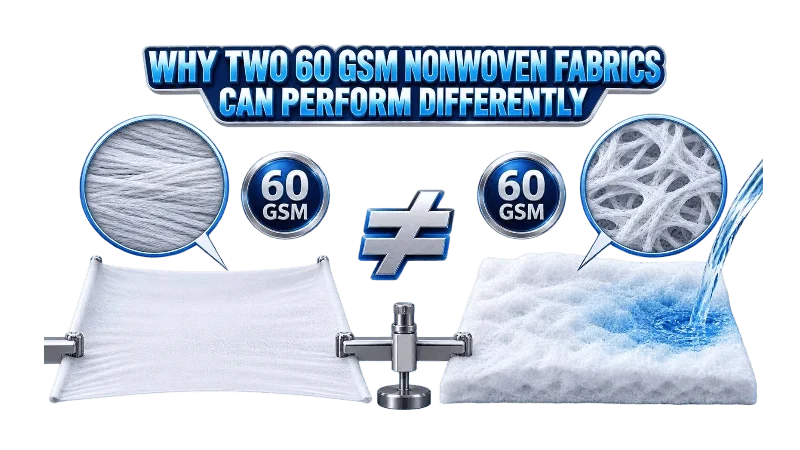
When sourcing wet wipes, buyers often use GSM as the first material comparison point.
A 60 GSM nonwoven may sound like a clear specification. It tells you the dry fabric weight per square meter. But it does not tell you everything about the fabric.
Two 60 GSM materials can have different fiber blends, thickness, density, texture, wet strength and absorbency. They can also behave differently after lotion loading, folding and packing.
This is why a wet wipes supplier should not quote a material simply as “60 GSM spunlace.” For private label wet wipes, the full fabric specification matters much more than one number.
What Does 60 GSM Actually Mean?
GSM means grams per square meter. In nonwoven terminology, it is the fabric’s basis weight: the mass of fabric per unit area.
A 60 GSM fabric therefore has a nominal dry weight of 60 grams per square meter. It does not automatically mean that the fabric is:
- 60 GSM thick
- Softer than another material
- Stronger when wet
- More absorbent
- More suitable for baby wipes
- Better for household cleaning
- More premium in the consumer’s hand
GSM is an important control point. But it is only one part of the material story.
A buyer comparing two 60 GSM nonwovens should ask: What fibers are used? How is the web formed? How dense is it? How much hydroentanglement has it received? What happens after it absorbs the final formula?
Fiber Composition Changes the Fabric Feel
The fiber blend is usually the first reason two fabrics with the same GSM perform differently.
Common wet wipes raw material options include viscose, polyester, lyocell, cotton, wood pulp and various blends. Each fiber type has different physical properties. Changing the blend changes the way the wipe feels, holds liquid, stretches and resists tearing.
For example, a 60 GSM viscose/polyester spunlace may offer a balance of softness, absorbency and wet strength. A 60 GSM 100% cellulose-based material may feel different in the hand and respond differently to the same cleaning formula. A polyester-rich material may have a different level of resilience and dimensional stability.
Research on hydroentangled wipes has compared polyester/viscose and flax/viscose blends using thickness, density, dry and wet tensile strength, elongation, absorption and simulated-use testing. This is a useful reminder that material performance depends on the fiber system, not basis weight alone.
For branded wet wipes, the fiber blend should support the intended product position. A soft baby wipe, a durable kitchen wipe and a commercial surface-cleaning wipe may all use 60 GSM material, but they should not necessarily use the same blend.
Fiber Length and Fineness Also Matter
Fiber composition is not the only variable. Fiber length and fineness can also change the finished nonwoven structure.
A study of carded, hydroentangled polypropylene nonwovens found that fiber length influenced processing behavior and could affect fabric thickness, air permeability and burst-strength performance. The study also showed that material structure is shaped by the interaction between fiber characteristics and hydroentanglement conditions.
In simple terms, two 60 GSM fabrics can contain the same type of fiber but still perform differently if the fibers are not the same length, thickness or configuration.
Finer fibers can create a smoother or softer surface. Different fiber lengths can influence how easily fibers are carded and entangled. These details may not be visible on a basic quotation, but they can affect the final consumer experience.
For this reason, wet wipes manufacturers should provide representative material samples and clear composition details rather than relying on GSM alone.
Web Formation Affects Strength in Different Directions
Before a nonwoven becomes fabric, the fibers are arranged into a web.
In carded nonwovens, fibers are opened, blended and combed into a web. The web may be laid mainly in the machine direction or arranged in a more randomized way. This affects strength, elongation and tear behavior in different directions.
A fabric with stronger machine-direction performance may behave differently when pulled from a soft pack compared with a more balanced material.
This matters during wet wipes manufacturing. The wipe needs to survive cutting, folding, lotion loading and dispensing. It also needs to remain intact when the consumer pulls it from the pack.
Two materials may both have a nominal 60 GSM, but one may be more likely to stretch in one direction. Another may have better balanced strength across the sheet. Neither is automatically better. The right choice depends on how the wipe will be used and packaged.
Hydroentanglement Determines How Fibers Hold Together
Most premium wet wipes use spunlace, also called hydroentangled nonwoven fabric.
Hydroentanglement bonds a fiber web by using high-pressure water jets. The jets entangle the fibers and create a stable fabric structure without traditional weaving.
The amount of bonding energy matters.
In the polypropylene hydroentanglement study, fabrics that passed through the hydroentangling system more times became more consolidated and showed lower thickness values because more energy was transferred from the water jets to the web.
That means two 60 GSM spunlace fabrics can have different density and bulk even if they use similar fiber blends.
One material may be lofty and soft. Another may be denser and more compact. The dense material may feel smoother or stronger, while the bulkier material may feel thicker in the hand.
This is why the buyer should compare both dry and wet samples.
Thickness Is Not the Same as GSM
A common mistake is to assume that a higher GSM always means a thicker wipe.
GSM measures mass per area. Thickness measures the distance between the top and bottom surfaces of the fabric under a defined test method.
Two 60 GSM fabrics can have different thicknesses because the fiber packing density is different. A lofty fabric contains more air space and may feel fuller. A compact fabric can have the same mass but a flatter profile.
In nonwoven testing, fabric density is calculated from mass and volume, while solid volume fraction indicates how tightly the fibers are packed. These structural factors influence pore size, permeability and other material properties.
For a wet wipe buyer, this has practical effects:
| Material Property | Possible Effect on the Finished Wipe |
|---|---|
| Higher bulk | Fuller hand feel and a thicker-looking wipe |
| Higher density | More compact fabric and potentially different liquid release |
| Higher porosity | Different absorption and lotion distribution |
| More consolidation | Better fiber entanglement but a flatter structure |
| Lower thickness | Lower stack height in the finished pack |
A thicker-looking 60 GSM wipe may create a larger pack. A denser 60 GSM wipe may allow a more compact pack at the same sheet count. Both can be suitable, but the packaging needs to be evaluated with the actual material.
Surface Pattern Can Change the Consumer Experience
The surface pattern is another reason two fabrics can look and feel different.
Spunlace material may be plain, pearl embossed, mesh, apertured or patterned. The hydroentanglement process can use different support belts or drums to create visual and tactile effects. EDANA notes that water-jet arrangements can create a wide range of aesthetic effects in hydroentangled nonwovens.
A plain wipe may be suitable for a soft and clean appearance. A textured wipe may offer more grip for surface cleaning. An apertured material can create a more open structure and a different cleaning feel.
However, pattern is not only about appearance. It can affect friction between wipes, lotion distribution, linting behavior and the way the sheet separates during dispensing.
For bulk wet wipes and household-cleaning products, a buyer may prioritize durability and pickup performance. For baby or facial wipes, the priority may be a smooth and gentle hand feel.
Wet Strength Is More Important Than Dry Strength
A dry nonwoven sample can look strong and feel premium. But wet wipes are used after being loaded with formula.
The material must still perform after absorbing the finished liquid. It must resist tearing, stretching and linting during normal use.
Research into wet-laid hydroentangled nonwovens found that hydroentanglement improved wet tensile strength, softness, air permeability and water absorbency compared with an unentangled wet-laid fiber web.
This does not mean every hydroentangled material performs the same way. It shows why wet testing is necessary.
When comparing two 60 GSM fabrics, ask for:
- Dry tensile strength
- Wet tensile strength
- Elongation in dry and wet states
- Liquid absorption capacity
- Linting observation
- Thickness under the agreed test method
- Finished-pack dispensing performance
A material that works well for a dry wiping task may not be the best option for a heavily loaded wet wipe.
The Same Material Can Behave Differently With Different Formulas
Fabric and formula should always be evaluated together.
A highly absorbent material may hold more liquid. A denser material may release the liquid differently during wiping. A surfactant-containing household-cleaning formula may change the way a wipe feels and separates inside the pack.
The formula can also affect stacking and dispensing. If wipes are too wet, adjacent sheets may cling together. If the lotion level is too low, the wipe may feel dry or fail to provide the expected cleaning coverage.
For OEM wet wipes, buyers should avoid approving a fabric based only on dry swatches. The factory should prepare finished samples using the intended material, formula, wipe size, fold and pack count.
Why Packaging Can Make Two Similar Fabrics Feel Different
Even when two fabrics have the same 60 GSM specification, the final pack may create a different user experience.
A bulkier fabric can increase stack height. If the same pack dimensions are used, the stack may experience more compression. This may make the first wipes harder to pull or increase the risk of double dispensing.
A denser fabric may create a slimmer stack but may feel less soft or less absorbent, depending on the fiber blend and structure.
The following details should be tested with the selected material:
- Pack dimensions
- Opening size
- Label or flip-top lid
- Fold type
- Interfolding arrangement
- Sheet count
- Lotion loading
- Storage orientation
- Repeated opening and resealing
This is especially important for custom printed wet wipes manufacturers and suppliers. Printed film should not be finalized until the fabric, finished stack and pack dimensions have been confirmed.
What Should Be Written in a Material Specification?
A purchase order that states only “60 GSM nonwoven” leaves too much room for interpretation.
For private label wet wipes, the material specification should include:
- Fiber composition and blend ratio
- Nominal GSM and tolerance
- Fabric type, such as spunlace or airlaid
- Surface pattern: plain, pearl, mesh or apertured
- Material color and appearance standard
- Thickness target, if required
- Dry and wet tensile requirements
- Absorption or lotion-loading target
- Wipe dimensions and tolerances
- Approved material supplier or material code, if needed
- Sampling method and change-control procedure
This makes it easier to compare quotations from wet wipes manufacturers in China and other sourcing markets.
It also helps protect the brand from unauthorized substitutions. Two materials may both be labeled 60 GSM, but they are not automatically equivalent.
Final Thoughts
Two 60 GSM nonwoven fabrics can perform differently because GSM only describes dry mass per square meter.
Fiber blend, fiber length, web formation, hydroentanglement, density, thickness, texture and formula compatibility all affect the finished wipe. Packaging compression and dispensing design add another layer of difference.
For brand wet wipes and private label projects, the right approach is to approve the full specification and test finished packs—not only fabric swatches or GSM figures.
QIMEI supports wet wipes production for private label and OEM brands with material selection, formula development, custom packaging and finished-pack sampling. Contact our team to compare suitable nonwoven options for your product and target market.
References
- INDA. Nonwovens Glossary of Terms. Defines basis weight and spunlace/hydroentanglement terminology.
- EDANA. How Are Nonwovens Made? Explains carding, web formation and hydroentanglement in nonwoven manufacturing.
- Soukupova, V., Boguslavsky, L., & Anandjiwala, R. D. (2007). Studies on the Properties of Biodegradable Wipes Made by the Hydroentanglement Bonding Technique. Textile Research Journal, 77(5), 301–311. https://doi.org/10.1177/0040517507078239
- Tabor, J., Wust, C., & Pourdeyhimi, B. (2019). The Role of Staple Fiber Length on the Performance of Carded, Hydroentangled Nonwovens Produced With Polypropylene Fibers. Journal of Engineered Fibers and Fabrics. https://doi.org/10.1177/1558925019870058
- Long, Y., et al. (2018). Environmentally Friendly and Breathable Wet-Laid Hydroentangled Nonwovens for Personal Hygiene Care With Excellent Water Absorbency and Flushability. Royal Society Open Science, 5, 171486. https://doi.org/10.1098/rsos.171486