 Meet Qimei at PLMA Chicago 2026 · November 15–17, 2026 · Booth #H3029
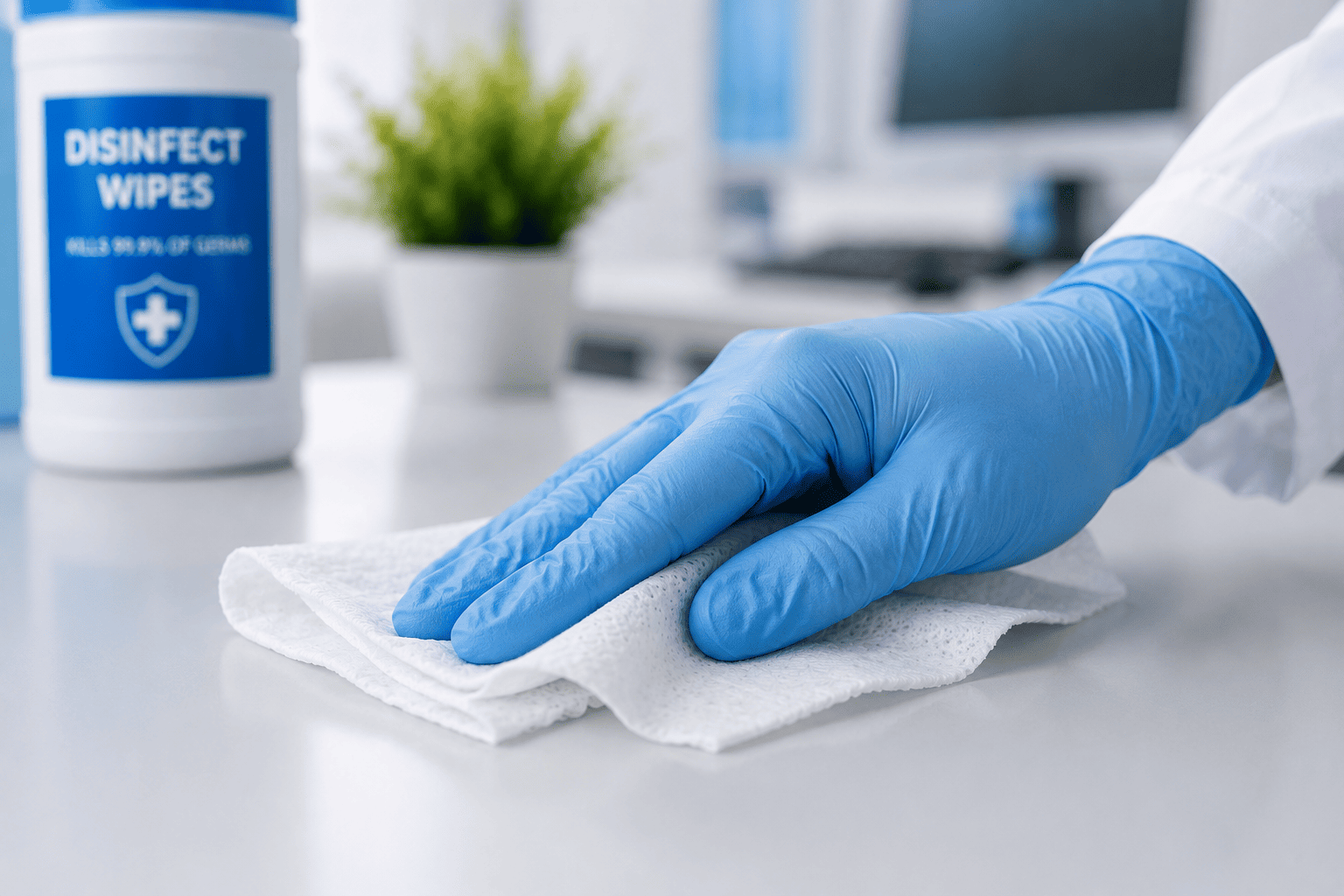
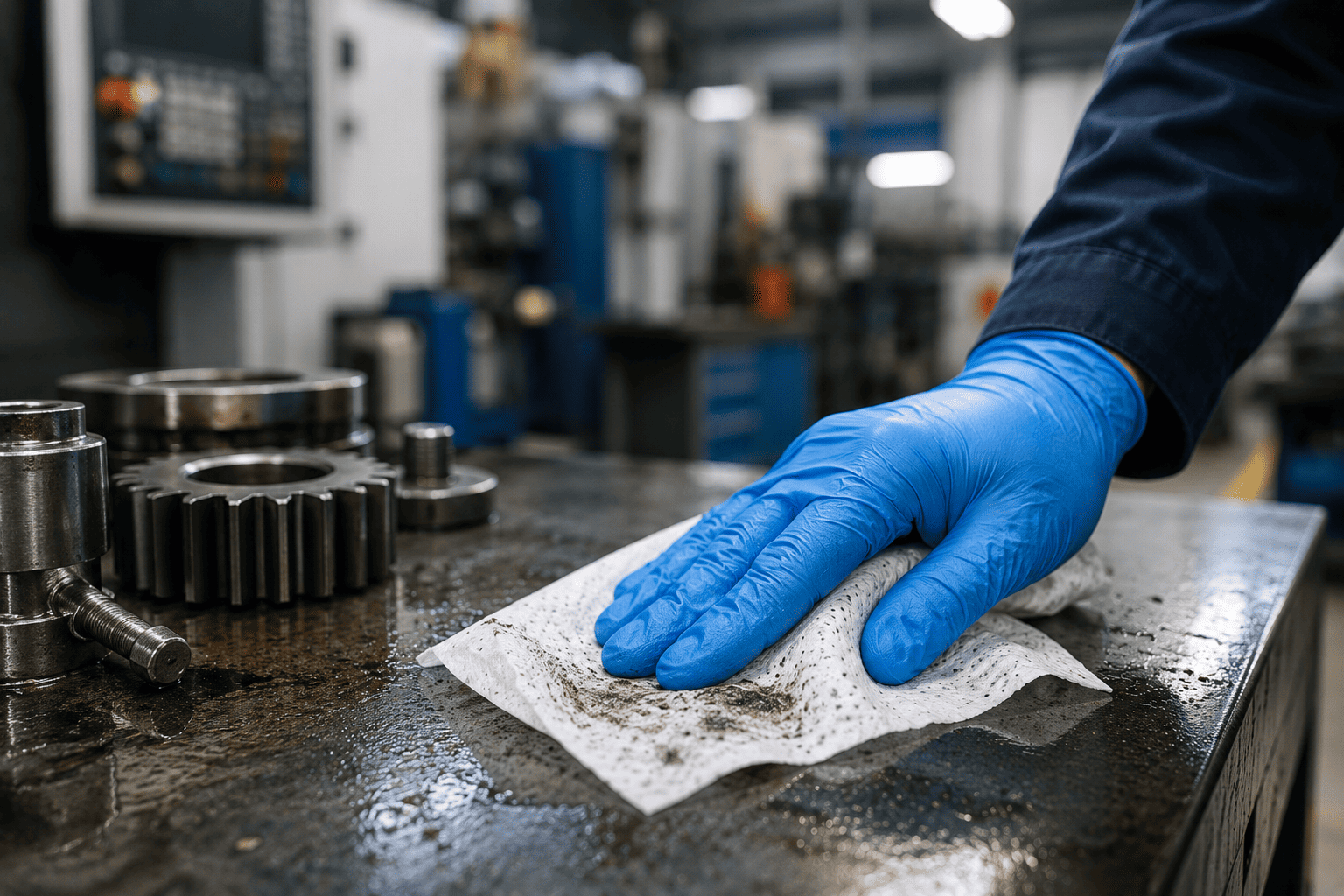


Industrial wipes are used where ordinary cleaning wipes are not enough. They may remove oil from hands, grease from tools, adhesive from work surfaces, dust from equipment or dirt from vehicle interiors.
For buyers, the product must work in real conditions. It needs the right fabric, formula and packaging for the job. A wipe for light workshop cleaning is very different from one designed for heavy grease, paint residue or car-dashboard detailing.
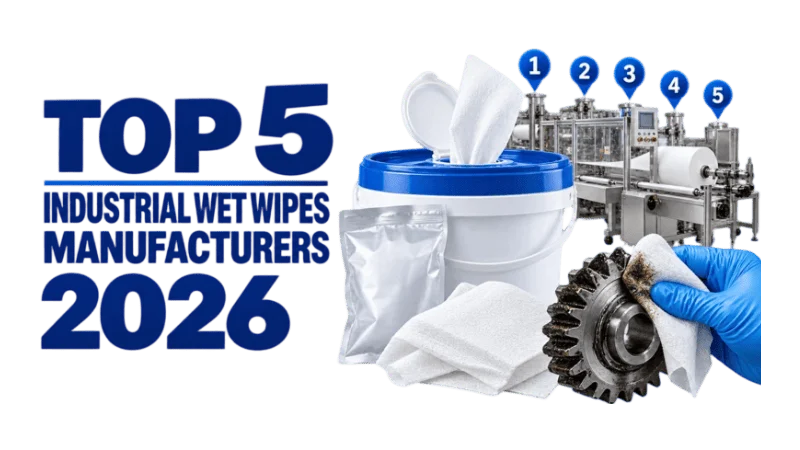
This article introduces five industrial wet wipes manufacturers relevant to sourcing projects in 2026. It is an editorial shortlist, not a verified ranking by revenue, capacity or market share. Some companies focus on OEM and private label wet wipes, while others are established suppliers of professional industrial wiping products.
1. QIMEI Hygiene
QIMEI Hygiene is an industrial wipes manufacturer that supports OEM wet wipes and private label wet wipes projects for brands, importers, distributors and professional cleaning suppliers.
Its industrial and special-cleaning wipe range can be developed for oil and grease removal, paint and glue cleaning, automotive care, workshop maintenance and hard-surface cleaning. Instead of relying only on a standard product, buyers can develop a wipe around the intended task.
For example, a grease-removal wipe may require a strong, textured nonwoven and an effective but surface-compatible formula. A car dash wet wipe manufacturer, however, needs to consider low residue, anti-static performance, material softness and compatibility with plastics, rubber and coated dashboard surfaces.
QIMEI can customize:
- Wet wipes raw material and fiber composition
- Wipe dimensions and GSM
- Formula and fragrance
- Embossing or plain fabric options
- Folding method and pack count
- Soft packs, tubs, canisters and refill packs
- Custom printed packaging
This flexibility helps buyers develop industrial wipes for different sales channels. A garage or workshop may prefer a large canister. A mobile technician may need a compact soft pack. Automotive retailers may prefer a branded pack designed for dashboard, interior and trim cleaning.
As a wet wipes supplier, QIMEI supports sample development, packaging confirmation and export-oriented wet wipes manufacturing. The goal is to turn a product idea into a specification that can be produced consistently.
2. Chicopee
Chicopee is a professional wipes manufacturer serving industrial, automotive, aerospace, foodservice, healthcare and building-care markets. Its industrial wipe range is relevant for buyers who need performance-led wiping solutions rather than standard consumer wet wipes.
The company is particularly known for nonwoven wiping materials with characteristics such as low lint, oil absorbency, wet strength, solvent compatibility and particle pickup. These are important factors in professional environments.
For example, a wiping material used before painting or coating may need to leave very little lint. A wipe used around machinery may need to absorb oil without tearing. A product used in automotive detailing may need to clean surfaces without leaving visible residue.
Chicopee is a useful reference for industrial buyers because it shows that “stronger” is not always the only goal. The right wipe depends on the process. A thick wipe may be suitable for heavy cleaning, while a lighter low-lint wipe may be better for precision work.
3. Rockline Industries
Rockline Industries is an established wet wipes manufacturer with experience in private-label, commercial and consumer wipe categories. Its scale and manufacturing background make it relevant for brands and retailers that need stable supply and controlled repeat production.
For industrial wipes, consistency matters. The wipe material, liquid loading and pack performance must stay stable from one production batch to the next. A product that works well in a first sample should also perform reliably in the final bulk order.
When selecting a wet wipes supplier, buyers should ask how the factory controls:
- Incoming wet wipes raw material
- Formula preparation
- Lotion loading
- Wipe cutting and folding
- Pack sealing
- Moisture retention
- Finished-product inspection
- Carton packing and shipping
These details directly affect the user experience. If the material changes, the wipe may tear more easily. If lotion loading changes, the pack may feel too dry or too wet. If the closure is unsuitable, wipes may dry out before the pack is finished.
Rockline’s presence in large-scale wipe production makes it a relevant option for established programmes where repeatability and supply-chain capability are key requirements.
4. Dr. Schumacher
Dr. Schumacher is a German manufacturer of hygiene, cleaning and disinfection products. Its professional portfolio makes it relevant for industrial cleaning projects that involve hygiene control, surface cleaning or regulated disinfecting claims.
Industrial cleaning wipes and disinfecting wipes should not be confused. A wipe may remove visible dirt, oil or grease without being a disinfectant. A disinfecting wipe needs a suitable active system, defined instructions for use and appropriate regulatory support for the target market.
This is important for any OEM wet wipes project. Terms such as “disinfectant,” “antibacterial,” “virucidal” or “kills germs” should be discussed before product development begins. They should not be added late in the packaging-design process.
Buyers should confirm:
- The target market
- The intended cleaning or disinfection claim
- The active ingredients, if applicable
- Contact-time requirements
- Surface compatibility
- Required testing and documentation
- Label wording and warnings
For professional cleaning brands, this approach helps prevent a common problem: creating packaging that makes claims the finished product cannot properly support.
5. GAMA Healthcare
GAMA Healthcare is a UK-based provider of infection-prevention and professional cleaning products. Its wipe systems are widely associated with hygiene-focused surface cleaning and disinfection environments.
For industrial buyers, GAMA Healthcare is a useful reference when the product is intended for professional hygiene use. It shows that the finished wipe is only one part of the solution. Users also need clear instructions, practical packaging and reliable dispensing.
A professional wipe must be easy to identify and easy to use. In a busy workplace, users should quickly understand what the product is designed to clean, where it can be used and whether any precautions apply.
For branded wet wipes, packaging should include the information that professional users need. This may include surface guidance, use directions, warnings, storage conditions and disposal instructions.
A wipe that performs well but is difficult to dispense or poorly labelled can still create complaints in the market.
What Makes Industrial Wipes Different?
Industrial wipes are designed around a cleaning task.
They may be used in workshops, factories, warehouses, vehicle-maintenance centres, construction sites, transport fleets and professional cleaning teams. The same formula and fabric will not suit every application.
Important product categories include:
- Oil and grease cleaning wipes
- Industrial hand-cleaning wipes
- Paint and glue removal wipes
- Tool and equipment wipes
- Automotive interior wipes
- Car dashboard wipes
- Heavy-duty surface-cleaning wipes
A buyer should first define what needs to be removed and what surface will be cleaned.
For instance, a car dashboard wipe may need to remove dust and fingerprints while leaving a clean finish. It should be tested on plastics, vinyl, rubber and coated surfaces. A paint-removal wipe may require stronger cleaning performance but still needs to be checked for surface compatibility.
The best industrial wipes manufacturer will ask these questions before recommending a material or formula.
How Wet Wipes Raw Material Affects Industrial Performance
Wet wipes raw material is one of the most important parts of industrial wipe development. It affects absorbency, strength, texture, linting, chemical resistance and cost.
Material options may include viscose, polyester, viscose and polyester blends, wood-pulp-based substrates and other nonwoven constructions.
Buyers should consider:
- Does the wipe need high wet strength?
- Does it need to absorb oil or liquid quickly?
- Is low linting important?
- Will the wipe contact sensitive or coated surfaces?
- Does the product need a textured surface for better pickup?
- Does the wipe need to resist stretching or tearing?
- What is the target price per pack or per wipe?
There is no universal “best GSM.” A high-GSM wipe may feel more substantial and may handle heavier cleaning. However, it also increases material use, pack size and cost. The right choice is the lightest material that still delivers the required performance.
The selected material should always be tested with the final formula. A dry nonwoven sample cannot fully show how the wipe will behave after saturation, folding and storage.
Why Packaging Matters in Industrial Wet Wipes
Industrial wipes are often used with dirty hands, gloves or limited workspace. The pack needs to work in that environment.
Common packaging choices include:
- Canisters for workshops and workstations
- Large tubs for heavy-duty use
- Refill packs for repeat purchasing
- Soft packs for retail and portable use
- Individual sachets for technicians and travel kits
A canister may be suitable for a fixed workbench because it protects the wipes and supports one-at-a-time dispensing. A soft pack may be more practical for a vehicle, tool bag or field-service team.
When working with custom printed wet wipes manufacturers and suppliers, packaging development should include more than the visual design. The pack must protect the liquid, keep wipes moist and provide clear product directions.
Do not approve printed film before confirming the final wipe size, fold, formula, pack count and closure. A late product change can create avoidable artwork revisions and packaging cost.
How to Compare Industrial Wipes Manufacturers
A strong sourcing process starts with a clear brief.
Before contacting industrial wipes suppliers, prepare the following information:
- Intended cleaning task
- Target surfaces
- Reference product or sample
- Desired wipe size and pack format
- Target market
- Expected product claims
- Required order quantity
- Preferred packaging style
- Target price position
Then ask each supplier practical questions:
- Can you support private label wet wipes or OEM wet wipes?
- Which materials do you recommend for our application?
- Can you develop a formula for oil, grease, paint or automotive surfaces?
- Can you provide test samples in the intended packaging?
- What formats can be custom printed?
- How do you control changes in wet wipes production?
- What are the MOQ and lead-time requirements?
- Can you support export documents and carton specifications?
The lowest quotation is not always the lowest total cost. A cheaper wipe that tears, dries out or leaves residue may create returns and damage the brand.
Test the Finished Pack Before Mass Production
Finished-pack testing is essential for industrial wipes.
The sample should use the intended formula, material, wipe size, folding method, pack count and closure. Buyers should test the wipe on the actual surfaces and soils it is designed to address.
Key checks include:
- Cleaning performance on the intended soil
- Wet strength during use
- Linting or residue
- Surface compatibility
- Moisture level and lotion distribution
- One-at-a-time dispensing
- Pack durability during transport
- Product appearance after storage
Wet wipes manufacturing is a connected process. A change in material, formula or packaging can affect the final product. Testing the complete pack helps reduce surprises when production starts.
Final Thoughts
The right industrial wipes manufacturer is the one that understands your cleaning task and can turn it into a stable product specification.
For private label industrial wipes, buyers should compare the whole system: wet wipes raw material, formula, cleaning performance, surface compatibility, pack format and production control.
Have an industrial wipes project, car dashboard wipe concept or reference sample? Send it to QIMEI. Our team will help you develop a practical OEM or private label wipe that is ready for sampling and production.