 Meet Qimei at PLMA Chicago 2026 · November 15–17, 2026 · Booth #H3029
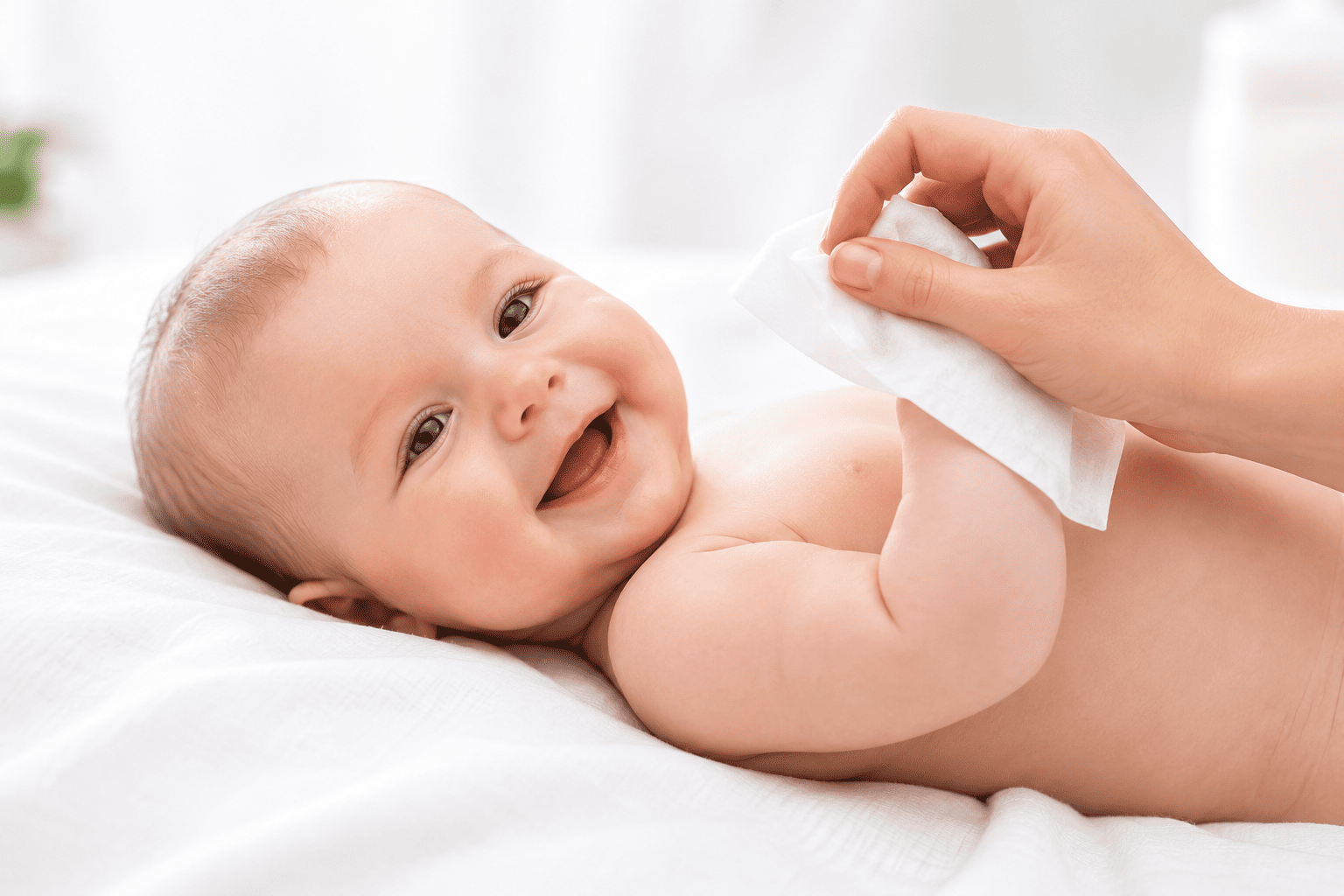


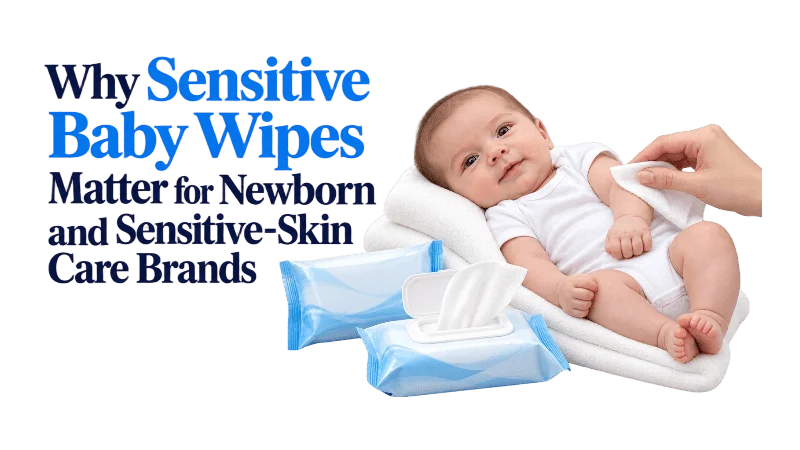
Sensitive baby wipes are now a core category for baby-care brands. Parents look closely at what touches their baby’s skin. They notice the material, fragrance, moisture level and ingredient list. They also expect the product to be gentle from the first wipe to the last.
For private label brands, this creates both an opportunity and a responsibility. A sensitive baby wipe cannot be developed by simply changing the pack design of a standard baby wipe. The formula, wet wipes raw material, preservation system and production controls all need to support the intended product position.
A good sensitive baby wipes manufacturer helps buyers turn a simple idea—such as “gentle wipes for newborns”—into a clear, workable product specification.
Sensitive Baby Wipes Are Not Just Standard Baby Wipes
A standard baby wipe may be suitable for everyday cleaning. A sensitive baby wipe usually needs a more focused development process.
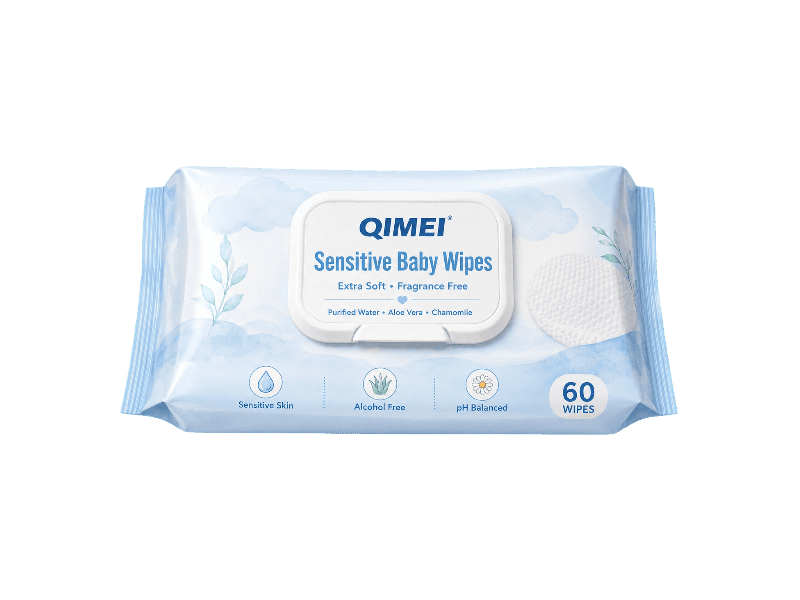
The product may be designed for newborns, frequent diaper changes, babies with delicate skin or parents who prefer a simpler ingredient profile. These wipes often use fragrance-free formulas and soft materials. However, the exact product design still depends on the target market, expected retail price and brand promise.
Sensitive baby wipes should be considered as a complete system:
- Formula and ingredient selection
- Wet wipes raw material
- Wipe size and GSM
- Lotion loading
- Preservation and microbiological control
- Fold and dispensing performance
- Packaging and moisture retention
- Product claims and artwork
A change in one part can affect the rest. For example, changing the nonwoven material can change how much lotion the wipe holds. Changing the formula can affect preservation, sheet separation and skin feel. Reducing the ingredient list may make the product easier to explain, but it does not remove the need for proper safety and stability testing.
Start with a Clear Product Position
Before contacting wet wipes manufacturers, a brand should define who the product is for.
Some sensitive baby wipes are made for newborn care. Others are positioned for fragrance-free everyday use. Some brands want a high-water-content formula. Others focus on plant-based materials, thicker wipes or minimalist packaging.
Useful questions include:
- Is the wipe designed for newborns or all baby ages?
- Will the product be fragrance-free?
- Is the brand focused on value, premium care or sustainability?
- What is the target retail channel?
- Does the product need a high-water-content position?
- What wipe size and pack count fit the market?
- Which country will the product be sold in?
- What claims will appear on the pack?
A clear brief helps the wet wipes supplier recommend the right formula and material. It also prevents a common problem: choosing packaging first, then discovering that the proposed wipe does not fit the promised product concept.
Formula Matters for Sensitive Baby Wipes
The formula is the liquid carried by the wipe. It affects the cleaning feel, moisture level, odor, preservation and consumer perception of the product.
A typical sensitive baby wipe formula may include purified water, gentle humectants, mild skin-conditioning ingredients, a preservative system and pH-adjusting ingredients. Some brands may request selected botanical extracts. Others may prefer a shorter, fragrance-free ingredient list.
There is no universal “best” formula. A sensitive baby wet wipe manufacturer should develop the formula around the product’s intended use, market requirements and supporting claims.
Important points to consider include:
1. Fragrance
Fragrance-free wipes are common in the sensitive baby-care category. They provide a clear, simple message for parents who prefer to avoid added scent.
If fragrance is included, it should fit the product positioning and be reviewed carefully. A strong perfume may not suit a newborn or sensitive-skin product.
2. Humectants and Skin Feel
Humectants help the wipe maintain moisture and can improve the feel of the liquid on the skin. The final level should be controlled. Too little may make the wipe feel dry. Too much may leave unwanted stickiness.
3. Ingredient Simplicity
A shorter ingredient list can be helpful for communication, but every formula still needs to perform safely and consistently. “Simple” does not mean “uncontrolled.” The formula must remain stable in the selected pack and resist microbial growth throughout its shelf life.
Choose the Right Wet Wipes Raw Material
The material is one of the first things parents notice. A wipe may be marketed as gentle, but it will not feel gentle if the fabric is rough, thin or easily torn.
Wet wipes raw material affects:
- Softness and surface feel
- Wet strength
- Absorbency
- Lotion release
- Thickness and bulk
- Linting
- Pack size
- Product cost
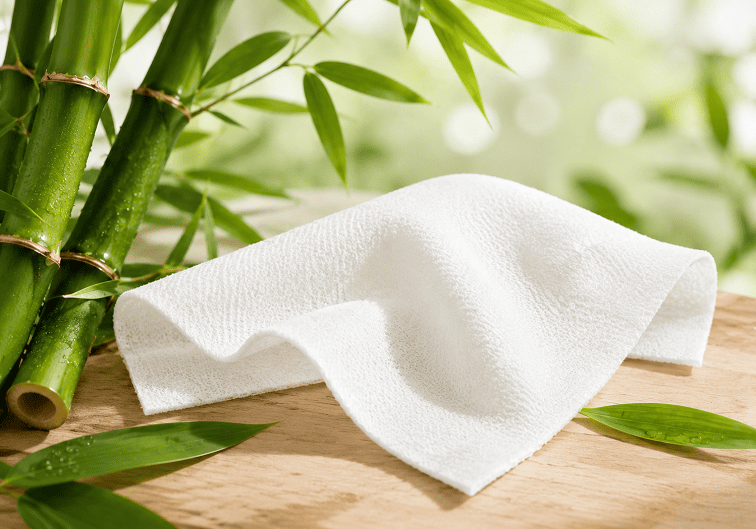
Common substrates for baby wipes include viscose, polyester and viscose blends, cotton-based options, cellulose-based nonwovens and selected bamboo-derived materials.
For sensitive baby wipes, brands often look for a soft and smooth material. However, softness must be balanced with strength. A wipe that feels very light may tear during use. A thicker material may create a more premium feel, but it can also increase stack height, package size and cost.
The right specification depends on the target product. A sensitive newborn wipe may prioritize softness and a gentle surface texture. A premium family pack may need greater strength and larger wipe dimensions.
Buyers should request samples using the final lotion and packaging. A dry nonwoven sample cannot show how the wipe will feel after it has absorbed the formula.
Preservation and Microbiological Control Are Essential
Baby wipes contain water. This makes preservation and production hygiene essential.
A sensitive baby wipe should not be treated as a low-risk product simply because the formula is mild. The preservation system must work with the complete formula, raw materials and packaging. It needs to maintain product quality during storage and normal consumer use.
Wet wipes production should include controls for water quality, raw-material handling, formula preparation, lotion loading, pack sealing and finished-product inspection.
Before mass production, the supplier should evaluate the product through appropriate microbiological, stability and preservation testing for the intended market and product type.
Brands should be careful with broad claims such as “preservative-free,” “chemical-free” or “100% natural.” These terms can be misleading and may create unnecessary expectations. A well-designed formula with an appropriate preservation system is often the more responsible choice.
Packaging Protects the Product Experience
Sensitive baby wipes need to stay moist, clean and easy to use. Packaging helps deliver all three.
Common formats include:
- Resealable soft packs
- Flip-top soft packs
- Travel packs
- Multipacks
- Refill packs
- Canisters or tubs
The closure should keep the formula inside the pack while allowing parents to remove wipes easily. The opening needs to work with the fold, material friction and lotion loading.
If the opening is too large, wipes may dry out more quickly or the next wipe may fall back inside. If it is too small, parents may struggle to remove a wipe during use.
Custom printed wet wipes manufacturers and suppliers should develop the packaging together with the product—not as a final design step. The wipe dimensions, fold style, pack count and closure all affect the finished pack size and artwork layout.
For branded wet wipes, packaging is also the first point of communication with parents. It should make the product benefit clear without using claims that are confusing or unsupported.
Selecting a Sensitive Baby Wipes Manufacturer
When comparing wet wipes manufacturers, buyers should look beyond the unit price.
A reliable supplier should be able to explain how the product will be developed, sampled and controlled during wet wipes production. The supplier should also be willing to identify potential risks before printed packaging or mass production begins.
Questions to ask include:
- Do you produce private label wet wipes and OEM wet wipes?
- Can you develop fragrance-free sensitive baby wipes?
- Which materials are available for baby-care products?
- Can you provide different GSM, wipe size and pack options?
- How is formula quality controlled during production?
- What testing can be arranged before mass production?
- Can you support custom printed packaging?
- How are changes to the formula or material managed?
- What are the MOQ, sample lead time and production lead time?
- Can you support export documents and carton specifications?
The best sensitive baby wipes manufacturer is not simply the one with the lowest quotation. It is the partner that can provide a suitable product specification and repeat that product consistently.
Building a Long-Term Sensitive Baby Wipes Range
Many brands begin with one sensitive baby wipe product and later expand the range.
Possible extensions include newborn wipes, extra-thick wipes, large family packs, travel packs, water-based wipes, bamboo baby wipes or other baby-care formats. A consistent manufacturing partner can make this process easier because the supplier already understands the brand’s quality expectations, packaging style and target market.
This is where private label wet wipes can create long-term value. The product does not need to be overly complicated. It needs to be clear, dependable and suitable for the people who will use it.
Final Thoughts

Sensitive baby wipes matter because parents expect more from the products they use every day. They want wipes that feel soft, stay moist and fit their baby-care routine.
For brands, that trust is built through the full product system: formula, wet wipes raw material, preservation, packaging and controlled wet wipes production.
Have a sensitive baby wipes concept, reference sample or pack idea? Send it to QIMEI. Our team can help you turn it into a practical private label product specification and a sample-ready project.