 Meet Qimei at PLMA Chicago 2026 · November 15–17, 2026 · Booth #H3029


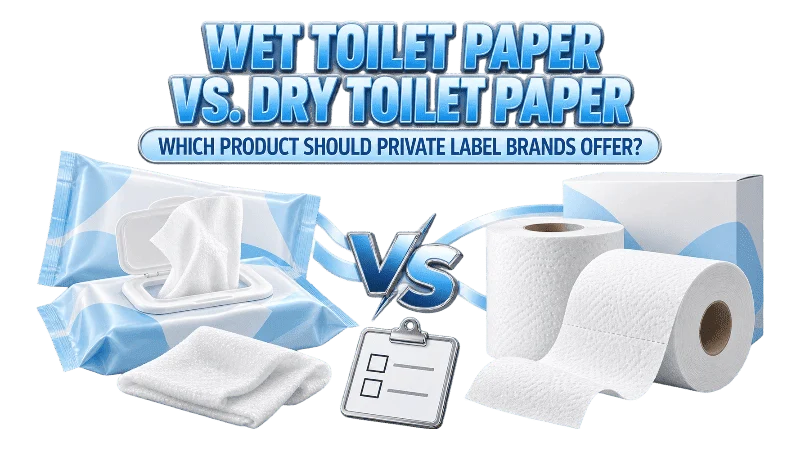
Dry toilet paper is a bathroom essential. Wet toilet paper is a fast-growing companion product in many retail markets. They are often compared as if one must replace the other, but that is not usually how consumers use them.
For most households, dry tissue handles everyday needs. Wet toilet tissue adds a more thorough, fresh-feeling clean when consumers want it. For private label brands, retailers and importers, the opportunity is not simply to choose between two products. It is to decide whether a wet toilet tissue range fits the brand, the retail channel and the target customer.
This article explains the practical differences between wet toilet paper and dry toilet paper from a B2B sourcing perspective. It also looks at the specifications buyers should confirm with wet toilet wipes manufacturers before launching a product.
Wet Toilet Paper and Dry Toilet Paper Serve Different Jobs
Dry toilet paper is a dry tissue product, commonly made from virgin or recycled pulp. It is designed for regular bathroom use, quick dispensing and easy disposal.
Wet toilet paper, also called moist toilet tissue or wet toilet wipes, is a pre-moistened personal-care product. It uses a nonwoven or paper-based substrate combined with a water-based lotion. The lotion helps the wipe feel moist, soft and comfortable during use.
The most useful way to position wet toilet tissue is as an addition to dry tissue, rather than a direct replacement. Dry toilet paper can be used first, while wet toilet paper can be used as the final cleansing step.
This positioning is familiar to consumers and easy for retailers to explain. It also gives private label brands room to build a more complete bathroom-hygiene range.
Wet Toilet Paper vs. Dry Toilet Paper: Key Differences
| Factor | Dry Toilet Paper | Wet Toilet Paper |
|---|---|---|
| Product format | Dry tissue roll | Pre-moistened wipe in a soft pack |
| Main material | Usually pulp-based tissue | Paper-based or nonwoven substrate with lotion |
| Moisture | Dry | Water-based cleansing lotion |
| Main use | Everyday wiping | Additional freshening and personal cleansing |
| Packaging | Rolls and multipacks | Resealable soft packs, flip-top packs or travel packs |
| Dispensing | Perforated sheets | Folded or interfolded wipes |
| Disposal | Usually designed to break down quickly in water | Depends on the exact product and verified flushability claim |
| Product-development focus | Softness, strength, absorbency and roll count | Material, formula, preservation, packaging and dispensing |
The comparison shows why wet toilet tissue is more complex to develop. A dry tissue roll does not need a preservation system or moisture-barrier packaging. A wet product does.
For wet wipes manufacturers, the substrate, lotion, fold, pack film, closure and product claim must all work together.
Why Consumers Choose Wet Toilet Tissue
Wet toilet tissue offers a different experience from dry paper because moisture can help remove residue with less dry friction. Consumers often associate the product with comfort, freshness and convenience.
This is especially relevant for:
- Families with young children
- Adults seeking a more complete clean
- Consumers who prefer a gentle personal-care routine
- Travel and on-the-go users
- Retailers building premium bathroom-care ranges
- Brands targeting sensitive-skin or fragrance-free positioning
The product does not need complicated marketing to make sense. A clear message works well: dry toilet paper for routine use, wet toilet tissue for the final clean.
For branded wet wipes, this straightforward product story can be more valuable than adding too many unsupported claims to the packaging.
The Material Makes a Major Difference
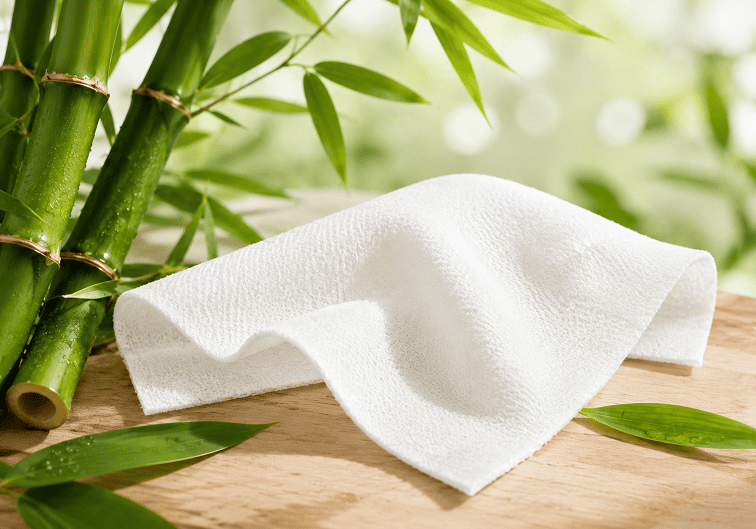
Wet toilet tissue needs a substrate that feels soft but remains intact during normal use. The right wet wipes raw material depends on whether the product is intended for bin disposal or is being developed for a verified flushable claim.
Common options may include cellulose-rich substrates, paper-based materials and dispersible nonwoven constructions. A standard spunlace wipe made for baby wipes or cosmetic wipes may have excellent wet strength, but it is not automatically suitable for toilet disposal.
Buyers should remember that plant-based, biodegradable, plastic-free and flushable are not interchangeable terms. A material may be made from renewable fibers but still be unsuitable for flushing.
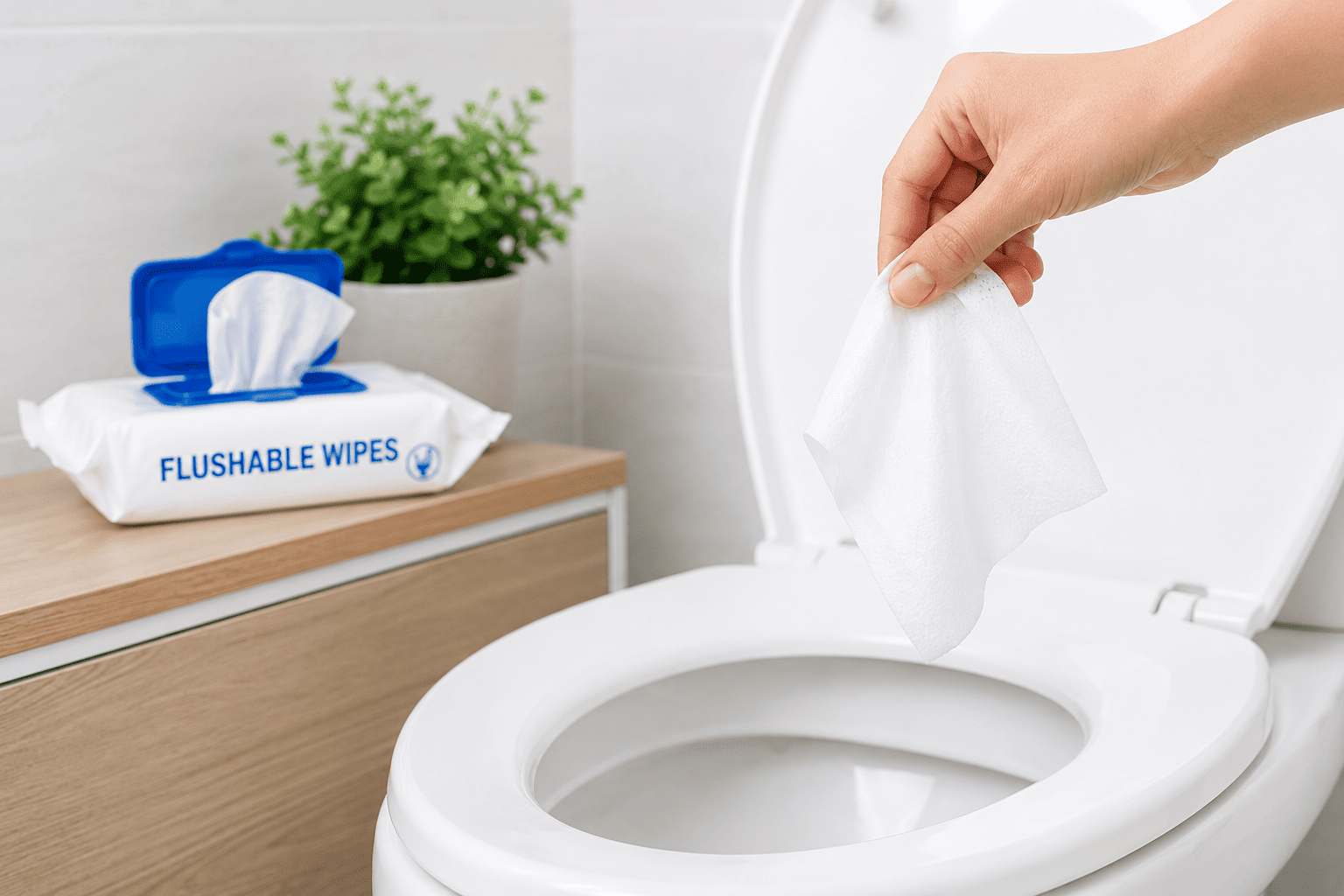
A product should only carry a flushable claim when the complete finished wipe has been evaluated according to the relevant requirements for its market. The wipe should be tested after lotion loading, folding and packaging—not only as a dry material sample.
Formula Is More Than Water
A wet toilet wipe usually has a water-based formula, but “water-based” does not mean the formula is simple to develop.
The lotion needs to deliver a pleasant skin feel while remaining compatible with the substrate, packaging and preservation system. Key factors include:
- Suitable pH for the intended personal-care application
- Good wetting and liquid distribution
- Product stability throughout shelf life
- Effective preservation in the final package
- Controlled fragrance, or a fragrance-free option
- Compatibility with the selected material
A simple formula may include purified water, humectants, mild skin-conditioning ingredients, preservatives and pH-adjusting ingredients. Some buyers prefer alcohol-free or fragrance-free products for a cleaner, more minimal product position.
For private label wet wipes, the formula should match the target customer. A value retail product may focus on reliable cleansing and an accessible unit price. A pharmacy or premium e-commerce brand may prioritize high water content, fragrance-free positioning or a softer substrate.
The Flushable Question Should Be Settled Early
Flushability is one of the biggest decisions in wet toilet wipes production.
A buyer should not leave it until packaging artwork is ready. It affects the substrate, the test plan, the wording on the pack and sometimes the product cost.
If the product is not designed and verified as flushable, the packaging should clearly state the correct disposal route. If a buyer wants to make a flushable claim, they should ask the wet wipes supplier:
- Which material is proposed?
- Is the product designed for the target market’s flushability requirements?
- Which test method or guideline will be used?
- Does testing apply to the finished wipe, not only the dry material?
- Is third-party test support available?
- What disposal instructions should appear on the pack?
Wet toilet wipes manufacturers in China can offer flexible material and packaging options, but buyers should confirm their target market and required claim at the start of the project. This avoids late changes to packaging artwork and specifications.
Choosing the Right Manufacturing Partner
When sourcing a new wet toilet tissue range, do not compare suppliers only by unit price. Ask how they manage product development, quality control and packaging coordination.
Reliable wet wipes manufacturers should be able to explain their approach to wet wipes production, including raw-material inspection, formula preparation, lotion loading, folding, sealing, microbiological control and finished-pack checks.
When assessing wet wipes manufacturers in China or elsewhere, buyers can ask:
- Do you produce wet toilet tissue as a regular category?
- Can you support private label wet wipes and OEM wet wipes projects?
- What wet wipes raw material options are available?
- Can you develop flushable and non-flushable formats separately?
- How do you test moisture retention and pack sealing?
- Can you provide custom-printed packaging?
- What is your MOQ for new branded wet wipes?
- How do you control consistency from approved sample to mass production?
A capable wet wipes supplier will answer these questions clearly and identify technical risks early. That is often more useful than a fast quotation based on incomplete information.
Final Thoughts
Wet toilet paper and dry toilet paper are not competing products in every bathroom. They serve different needs and can work well together in one private label range.
Dry tissue remains the everyday essential. Wet toilet tissue creates an opportunity for brands to offer added comfort, freshness and a more premium personal-care experience.
QIMEI supports private label and OEM wet wipes projects from product concept to mass production. Contact our team to discuss wet toilet tissue materials, formula development, custom packaging and bulk wet wipes production for your target market.