 Meet Qimei at PLMA Chicago 2026 · November 15–17, 2026 · Booth #H3029
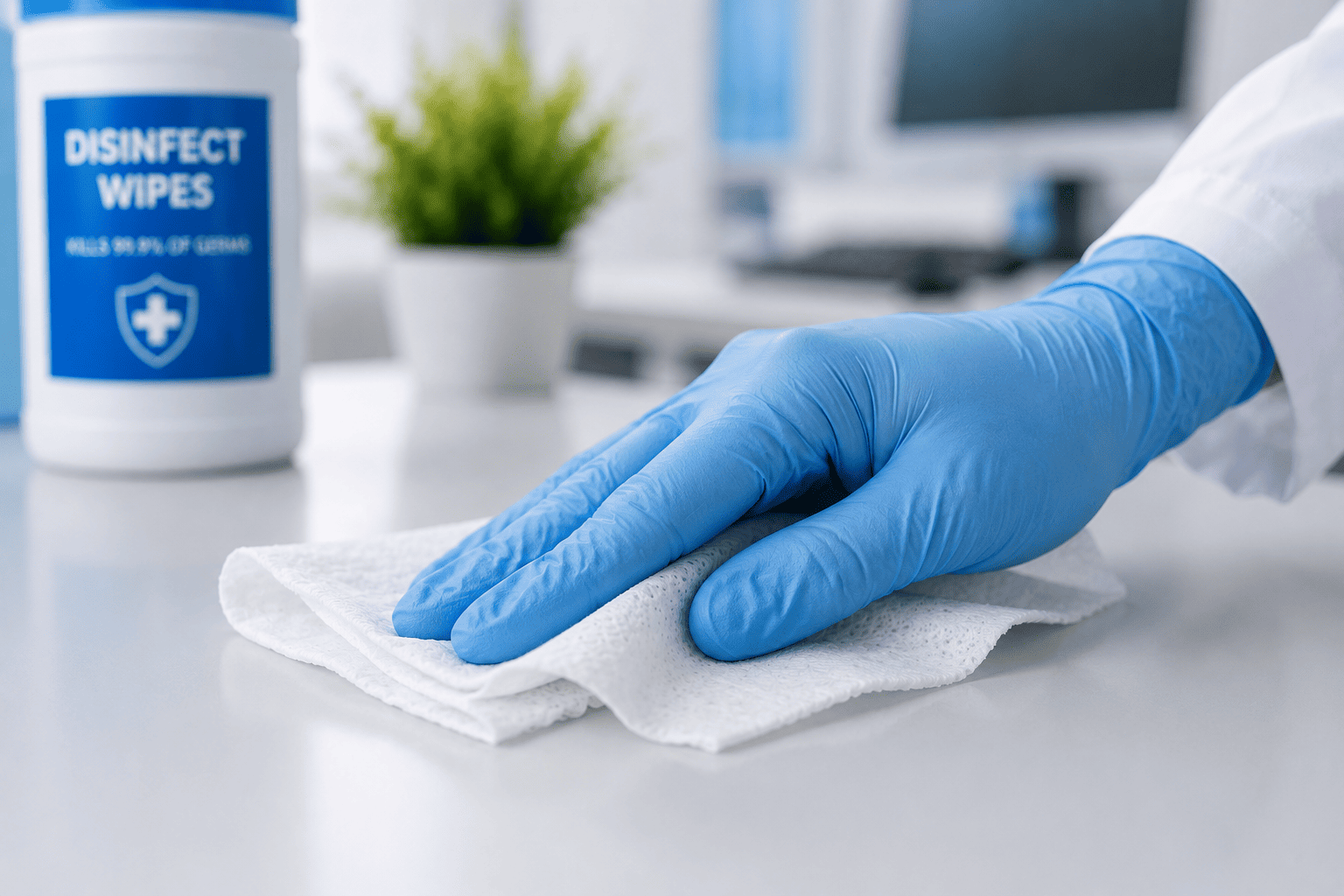
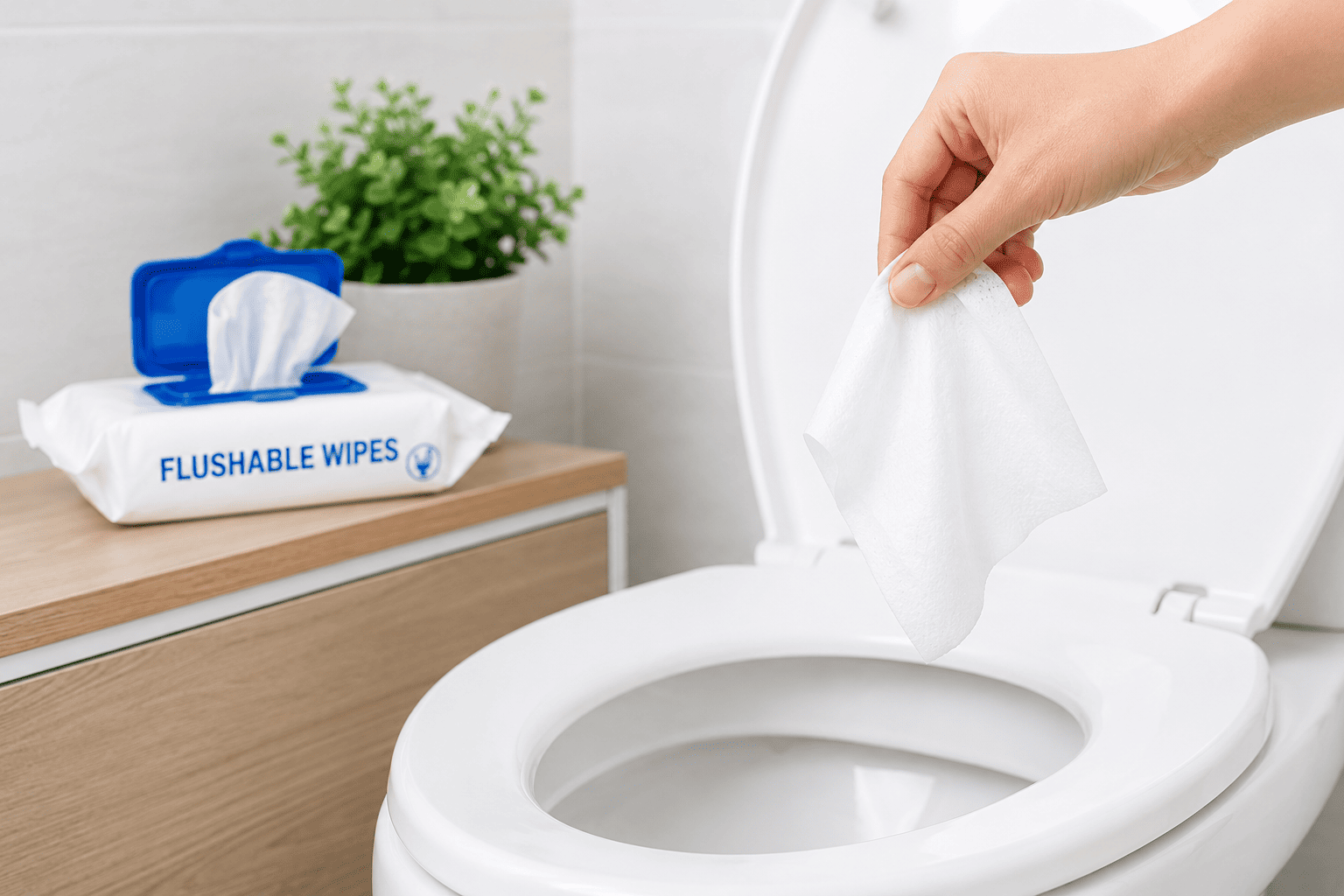
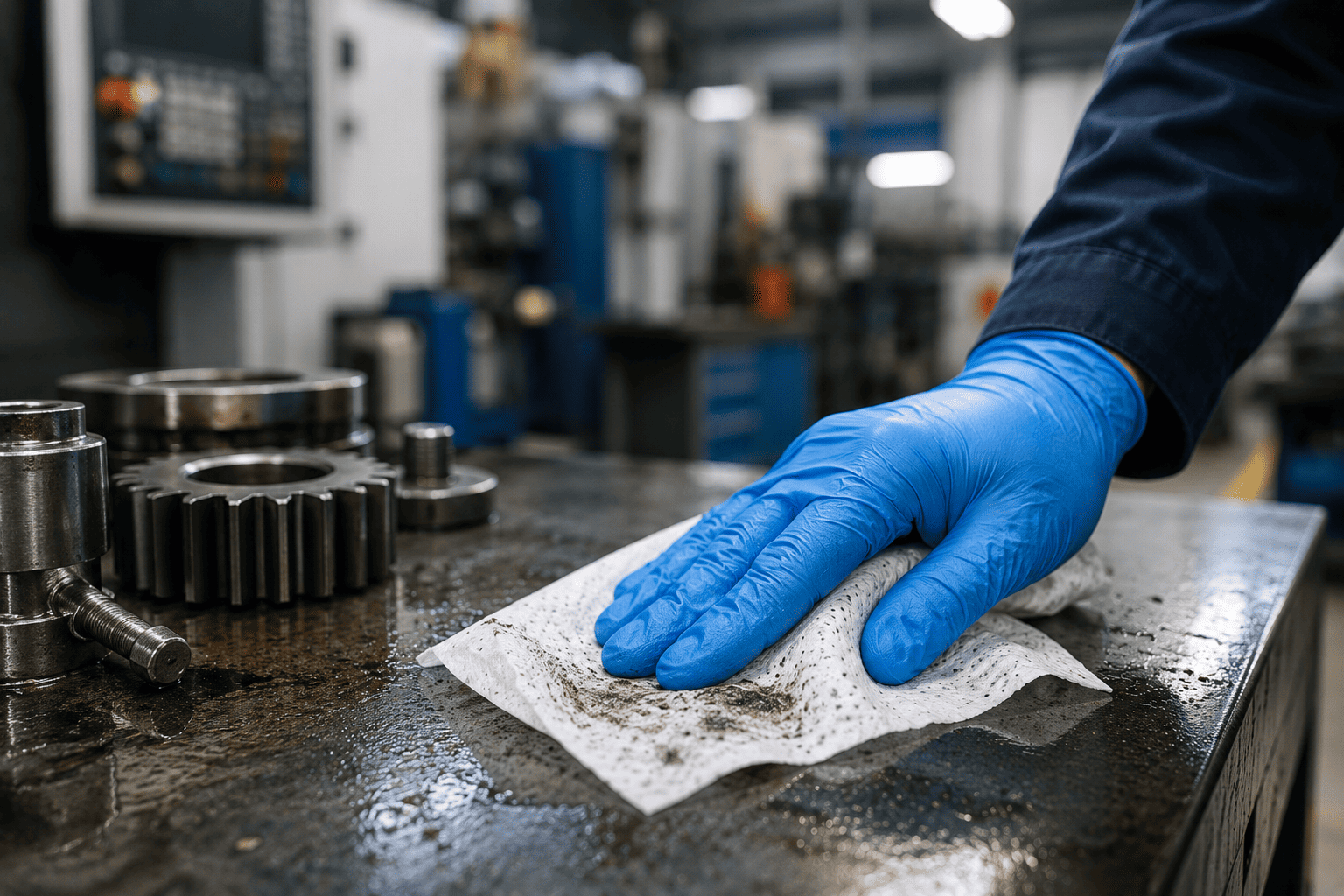
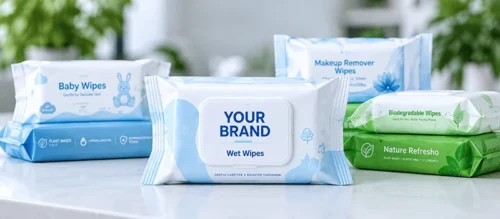



Wet wipes are used across baby care, personal hygiene, household cleaning, pet care, healthcare and industrial applications. Although the finished product looks simple, manufacturing reliable wet wipes requires close control of the nonwoven fabric, liquid formulation, packaging materials, production environment and testing procedures.
A change in fabric composition, wipe size, liquid loading or packaging structure can affect product performance, shelf life and cost. That is why professional wet wipes manufacturing involves much more than simply adding liquid to a piece of nonwoven fabric.
This guide explains how wet wipes are made, what equipment is required and how manufacturers control product quality from raw materials to finished cartons.
What Are Wet Wipes Made Of?
A finished wet wipe contains three main components: nonwoven fabric, liquid formulation and packaging.
Nonwoven Fabric
The nonwoven fabric is the physical wiping material. It determines the softness, absorbency, wet strength, cleaning ability and environmental characteristics of the product.
Common wet wipes materials include:
- Viscose
- Polyester
- Viscose and polyester blends
- Lyocell
- Bamboo-derived viscose
- Cotton
- Wood pulp
- Polypropylene
- Dispersible cellulose fibers
Baby wipes and facial wipes usually require soft and absorbent materials. Household and industrial wipes may need greater tensile strength and resistance to tearing. Flushable wipes require specially engineered dispersible materials that can maintain strength during use and break apart appropriately after disposal.
The manufacturer and buyer should confirm:
- Fiber composition
- Basis weight in GSM
- Wipe dimensions
- Plain or embossed texture
- Wet and dry strength
- Absorbency
- Biodegradable or plastic-free requirements
- Flushability requirements where applicable
A heavier fabric may feel thicker, but it does not automatically provide better performance. The correct material depends on the product application, target price and expected consumer experience.
Liquid Formulation
The liquid formulation provides the cleansing, moisturizing, deodorizing or antimicrobial function.
A wet wipes formula may include:
- Purified water
- Surfactants
- Humectants
- Emollients
- Preservatives
- Chelating agents
- pH adjusters
- Fragrance
- Botanical extracts
- Deodorizing ingredients
- Antimicrobial active ingredients
The formula must match the intended use. Baby wipes require a mild, skin-compatible formulation, while household cleaning wipes may contain stronger surfactants or solvents. Disinfecting wipes require suitable active ingredients and efficacy testing to support antimicrobial claims.
Packaging Materials
Wet wipes packaging helps prevent leakage, contamination and moisture loss.
Common formats include:
- Soft packs with resealable labels
- Soft packs with plastic flip-top lids
- Individual sachets
- Plastic canisters
- Refill bags
- Travel packs
- Industrial buckets
The packaging material must remain compatible with the liquid formulation throughout the intended shelf life. Poor seal integrity or unsuitable packaging film may lead to leaking, evaporation, fragrance loss or changes in product performance.
How Are Wet Wipes Made Step by Step?
The exact process depends on the product type and packaging format, but most wet wipes follow the same core manufacturing stages.
Step 1: Product Specification Development
Before production begins, the buyer and manufacturer define the complete product specification.
This normally includes:
- Intended use
- Target market
- Nonwoven composition
- Fabric GSM
- Wipe dimensions
- Embossing pattern
- Fold type
- Liquid formula
- Fragrance
- Liquid loading
- Wipes per pack
- Packaging format
- Required claims
- Testing requirements
- Order quantity
This stage is important because every specification affects production feasibility, MOQ, unit price and lead time.
Descriptions such as “soft,” “thick” or “high quality” are not precise enough for mass production. Wherever possible, the requirements should be converted into measurable specifications.
Step 2: Raw Material Inspection
The factory inspects the fabric, formula ingredients and packaging components before releasing them for production.
Incoming quality checks may include:
- Fabric composition and GSM
- Fabric width
- Roll condition
- Absorbency
- Tensile strength
- Ingredient appearance and odor
- Packaging dimensions
- Film printing and color
- Label adhesion
- Lid dimensions
- Carton quality
- Supplier batch documents
Materials that do not meet the approved specification should be isolated and investigated before use.
Step 3: Purified Water Treatment
Water is usually the largest component of a wet wipes formulation, so water quality is fundamental to product safety and stability.
Professional manufacturers use water purification equipment such as reverse osmosis or a combined purified water system. The purpose is to reduce minerals, microorganisms and other impurities that could affect the formula.
The purified water is stored and transferred under controlled conditions. Water quality should be monitored according to the factory’s quality-management procedures.
Preservatives cannot compensate for contaminated water or poor production hygiene. Microbiological control must begin with the water system and manufacturing environment.
Step 4: Wet Wipes Lotion Preparation
The purified water is transferred into a mixing tank. The formulation ingredients are measured and added in a controlled sequence.
The lotion preparation process may include:
- Adding purified water to the mixing tank.
- Adding water-soluble ingredients.
- Incorporating humectants and surfactants.
- Adding preservatives and chelating agents.
- Adjusting the pH.
- Adding fragrance, extracts or other functional ingredients.
- Mixing until the lotion is uniform.
- Checking the formula before production use.
The order of addition matters. Some ingredients may become cloudy, unstable or less effective if they are mixed incorrectly.
Before release, the lotion may be checked for:
- Appearance
- Odor
- pH
- Color
- Clarity
- Formula-specific physical properties
The approved result should match the product specification or reference sample.
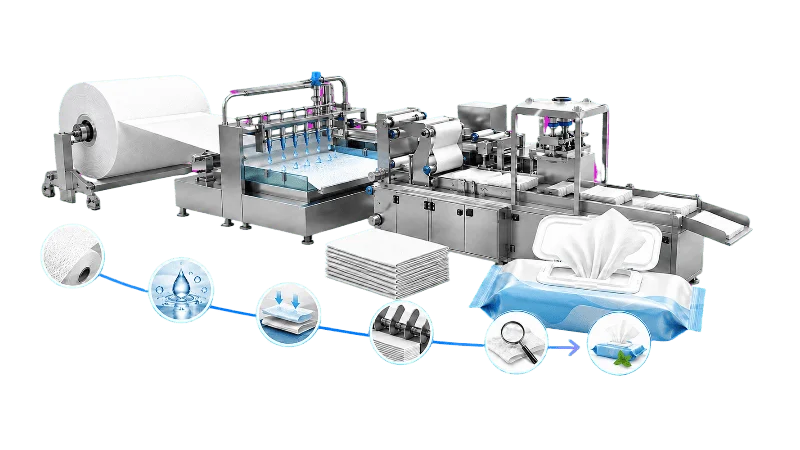
Step 5: Fabric Unwinding, Folding and Cutting
Large rolls of nonwoven fabric are loaded onto the wet wipes production line.
The machine unwinds the material and converts it into the required wipe format. Depending on the product, the fabric may be:
- Z-folded
- C-folded
- Interfolded
- Cross-folded
- Perforated on a roll
- Cut into individual sheets
The fold type affects pack dimensions and dispensing performance. Z-folded or interfolded products are commonly used when one-at-a-time dispensing is required.
During this stage, the machine controls:
- Wipe width
- Wipe length
- Folding position
- Cutting accuracy
- Wipe count
- Stack alignment
The production team checks these parameters against the approved specification.
Step 6: Liquid Dosing and Wipe Saturation
The prepared lotion is transferred to the production line and applied to the nonwoven fabric through a controlled dosing system.
The required amount depends on:
- Fabric composition
- Fabric absorbency
- GSM
- Wipe dimensions
- Wipes per pack
- Product application
- Desired moisture level
- Finished-pack weight
Insufficient liquid may cause the wipes to feel dry or provide poor cleaning performance. Excessive liquid increases weight and may cause leakage or make dispensing difficult.
The lotion should also be distributed evenly. Uneven saturation can result in some wipes being excessively wet while others remain too dry.
Step 7: Wet Wipes Packaging and Sealing
After the wipes are folded, cut and saturated, they are placed into the selected packaging.
For soft-pack wipes, printed packaging film is formed around the stack and heat-sealed. A resealable label or plastic lid may then be applied over the dispensing opening.
For canister wipes, the saturated roll or stack is inserted into the container before the lid is fitted.
For individual sachets, each wipe is folded, saturated and sealed separately.
Important packaging controls include:
- Pack dimensions
- Seal temperature
- Seal pressure
- Seal position
- Label position
- Lid position
- Opening size
- Pack weight
- Printed artwork direction
- Leakage resistance
A stable formula can still fail if the packaging seal allows moisture to escape. Formula, substrate and packaging should therefore be evaluated as one complete product system.
Step 8: Batch Coding and Online Inspection
Each finished pack receives the required traceability information.
Depending on the market and artwork, this may include:
- Batch number
- Manufacturing date
- Expiry date
- Best-before date
- Production time
- Production line identification
During production, operators inspect the packs for:
- Correct wipe count
- Consistent pack weight
- Clear batch coding
- Accurate artwork direction
- Seal defects
- Damaged film
- Incorrect label or lid placement
- Leakage
- Visible contamination
Automated lines may also use checkweighers, cameras, metal detectors or other inspection equipment.
Step 9: Carton Packing and Final Inspection
Finished packs are placed into master cartons according to the confirmed packing specification.
The carton information may include:
- Packs per carton
- Carton dimensions
- Net weight
- Gross weight
- Shipping marks
- Batch number
- Product name
- Country-of-origin information
The manufacturer completes a final inspection before the cartons are released for storage or shipment.
What Equipment Is Used in Wet Wipes Manufacturing?
Wet wipes manufacturing requires several connected systems rather than one machine.
Water Treatment System
The water treatment system supplies purified water for lotion preparation. Its capacity must support the factory’s production requirements.
Formula Mixing Equipment
Mixing tanks are used to prepare, mix and temporarily store the lotion. The tanks should support controlled operation, cleaning and batch traceability.
Nonwoven Converting Machine
The converting section unwinds, folds and cuts the nonwoven fabric. Machine configuration depends on the fabric width, wipe dimensions, fold type and pack count.
Liquid Dosing System
The dosing system applies a controlled quantity of lotion to the fabric. Accurate dosing supports consistent moisture and pack weight.
Wet Wipes Packaging Machine
Packaging equipment forms and seals soft packs, sachets or refill bags. Canisters, buckets and other rigid containers require different filling and closing systems.
Coding and Inspection Equipment
Coding equipment prints traceability information. Inspection systems may check product weight, seal quality, coding, metal contamination and packaging appearance.
Not every wet wipes product can run on the same production line. A factory that produces baby wipes in soft packs may not automatically have suitable equipment for individual alcohol wipes, canister rolls or oversized industrial wipes.
How Do Manufacturers Control Wet Wipes Quality?
Wet wipes quality control covers incoming materials, production processes and finished products.
Raw Material Quality Control
The manufacturer checks nonwoven fabric, ingredients, packaging film, labels, lids and cartons against approved specifications.
In-Process Quality Control
During manufacturing, the production team monitors:
- Wipe dimensions
- Fabric GSM
- Fold accuracy
- Wipe count
- Liquid dosage
- Pack weight
- Seal integrity
- Batch coding
- Label and lid placement
- Packaging appearance
Regular in-process checks help identify problems before a large volume is produced.
Finished-Product Testing
Testing depends on the product type, claims and destination market.
Possible tests include:
- Appearance and odor
- pH
- Wipe dimensions
- Fabric weight
- Liquid loading
- Microbial limits
- Preservative efficacy
- Stability
- Packaging compatibility
- Seal integrity
- Dermatological testing
- Cleaning performance
- Antimicrobial efficacy
- Flushability
- Biodegradability
Microbial limits testing and preservative efficacy testing serve different purposes. A finished batch may meet microbial limits at the time of production but still require a challenge test to confirm that the preservative system can control contamination during the product’s intended shelf life.
Retention Samples and Batch Records
Manufacturers normally retain representative samples and production records according to their internal quality procedures.
These records support:
- Batch traceability
- Complaint investigation
- Product comparison
- Corrective actions
- Recall management where necessary
How Does Production Differ by Wet Wipe Type?
The basic manufacturing stages are similar, but different product categories require different materials, formulas and controls.
Baby and Personal Care Wipes
Baby wipes, facial wipes and intimate wipes normally prioritize softness, skin compatibility, mild surfactants and controlled microbial quality.
Product development may require dermatological testing, stability testing and preservative efficacy testing.
Household Cleaning Wipes
Household wipes require suitable wet strength and effective soil removal. The formula may contain surfactants, solvents, fragrance or surface-care ingredients.
The manufacturer should check compatibility with the intended surfaces and packaging.
Disinfecting Wipes
Disinfecting wipes use antimicrobial active ingredients designed to achieve specific claims.
The manufacturer and brand owner must consider:
- Active ingredient concentration
- Contact time
- Wipe coverage
- Formula stability
- Packaging compatibility
- Efficacy testing
- Market-specific registration
In-pack preservation is different from proving that a wipe disinfects a surface during use.
Flushable Wipes
Flushable wipes require dispersible nonwoven materials and a suitable folding and packaging process.
A product should not be described as flushable simply because it is biodegradable or plastic-free. Flushability requires appropriate testing related to dispersibility and wastewater-system compatibility.
Industrial Cleaning Wipes
Industrial wipes may require:
- Larger wipe dimensions
- Higher GSM
- Stronger fabric
- Greater liquid loading
- Solvent-resistant packaging
- Formulas for oil, grease, paint or adhesive
The manufacturer must verify that the formula does not weaken the fabric or damage the packaging.
Individual Sachet Wipes
Individual sachets require each wipe to be folded, dosed and sealed separately.
They are commonly used for:
- Alcohol pads
- Lens cleaning wipes
- Restaurant wipes
- Travel wipes
- Medical or professional applications
Because each wipe uses a separate package, the material cost, production equipment and MOQ differ from multi-count soft packs.
What Factors Affect Wet Wipes Quality and Performance?
Several specifications determine how the finished product feels and functions.
Fabric Composition
Viscose improves softness and absorbency, while polyester can increase strength and durability. Plant-based materials may support plastic-free or sustainability positioning when the full material composition supports the claim.
Fabric GSM
A higher GSM generally produces a thicker wipe, but it also increases material consumption and cost. The correct GSM depends on the application rather than one universal quality standard.
Wipe Dimensions
Larger wipes provide more cleaning area but require more fabric, liquid and packaging space.
Embossing
Embossing can improve texture, appearance and cleaning performance. However, it may also affect cost and perceived softness.
Fold Type
The fold type affects dispensing, pack dimensions and machine compatibility. Z-folding is commonly selected for one-at-a-time dispensing, while C-folding may be used for products where individual sheets do not need to pull the next wipe forward.
Liquid Loading
The amount of lotion influences moisture, cleaning performance, finished-pack weight and transportation costs.
Packaging Quality
Packaging must retain moisture and protect the wipes throughout storage, transportation and repeated opening. Seal quality, label adhesion and lid design all affect consumer experience.
How Long Does Wet Wipes Manufacturing Take?
The complete project timeline includes more than machine production.
Typical stages include:
- Product requirement confirmation
- Quotation
- Sample preparation
- Formula and material approval
- Packaging artwork
- Packaging printing
- Raw material purchasing
- Mass production
- Testing and inspection
- Shipment
Standard formulas and existing packaging can usually be prepared faster than fully customized products.
After the specification, artwork and materials are confirmed, mass production commonly takes approximately 15–30 days. Custom packaging, new formulas, special materials or third-party testing can extend the total timeline.
Buyers should include formula development, artwork revision, testing and packaging preparation when planning a product launch.
What Should Private Label Buyers Confirm Before Production?
Before mass production, the buyer should approve a written specification covering:
- Product name
- Intended use
- Destination market
- Nonwoven composition
- Fabric GSM
- Wipe dimensions
- Embossing
- Fold type
- Formula
- Fragrance
- Liquid loading
- Wipes per pack
- Packaging structure
- Label or lid type
- Pack dimensions
- Batch-code position
- Packs per carton
- Carton dimensions
- Testing requirements
- Artwork version
- Approved reference sample
- Permitted production tolerances
- Delivery terms
The quotation, approved sample and production specification should describe the same product. If one document shows a different fabric, size, formula or packaging structure, the difference should be resolved before production.
Frequently Asked Questions About Wet Wipes Manufacturing
What Is the MOQ for Custom Wet Wipes?
MOQ depends on the packaging format, wipe count, printed film, formula and production line. Soft packs, canisters, refill bags and individual sachets have different minimum order requirements.
Can a Manufacturer Use My Existing Formula?
Yes. An OEM manufacturer may evaluate a formula supplied by the buyer. Production depends on ingredient availability, manufacturing feasibility, safety, stability and destination-market requirements.
Can the Fabric or Formula Be Changed After Sample Approval?
Changes are possible, but they may affect the price, product performance, testing results, artwork and production schedule. Any change should be documented and reviewed before mass production.
Are Wet Wipes Sterile?
Most consumer wet wipes are not sterile. However, they must meet appropriate microbiological quality requirements. Certain medical or specialized products may require additional controls based on their classification and intended use.
What Documents Can a Wet Wipes Manufacturer Provide?
Depending on the product and cooperation stage, available documents may include:
- Product specification
- Ingredient list
- Certificate of Analysis
- SDS or MSDS
- Microbiological test report
- Preservative efficacy test report
- Stability report
- Factory certificates
- Material certificates
- Inspection report
Can Different Wet Wipes Be Produced on the Same Machine?
Some products can share a production line if their dimensions, fold types and packaging formats are compatible. Others require dedicated equipment. Buyers should confirm machine capability before finalizing the specification.
Final Thoughts
Wet wipes manufacturing is a controlled process that combines nonwoven fabric conversion, purified water treatment, formula preparation, liquid dosing, packaging and quality inspection.
The finished product is influenced by every specification, from fiber composition and GSM to formula pH, fold type and package seal integrity. For private label buyers, clearly confirming these details before mass production is the most effective way to reduce quality disputes, pricing changes and launch delays.
QIMEI HYGIENE provides OEM and private label wet wipes manufacturing services, including material selection, formula customization, packaging development, sample preparation, mass production and testing coordination. Contact our team to discuss a wet wipes product designed for your target market.