 Meet Qimei at PLMA Chicago 2026 · November 15–17, 2026 · Booth #H3029

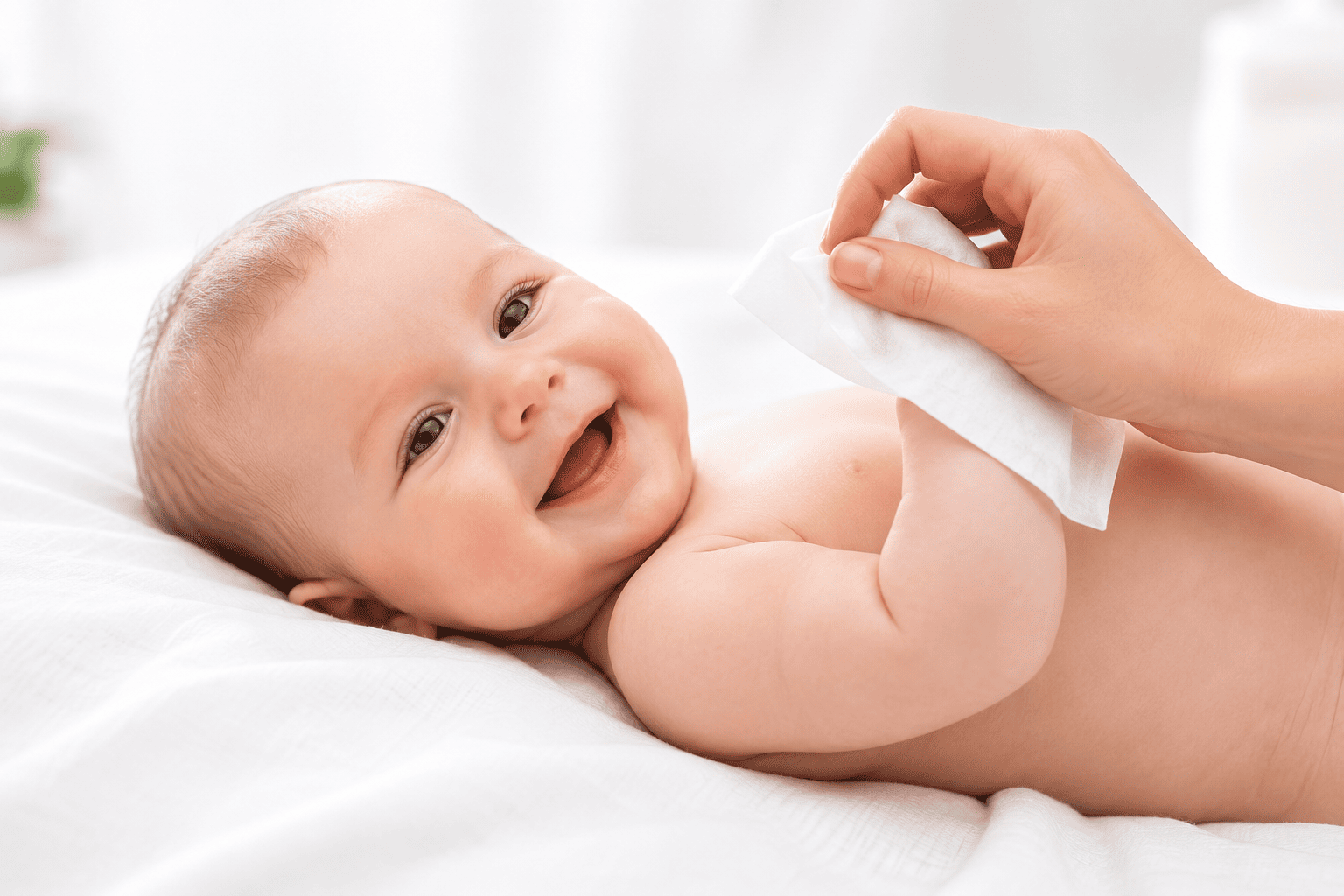





pH is a small number on a wet wipe specification sheet, but it can influence almost every stage of formula development.
It can affect how a wipe feels on skin, how ingredients behave in water, how well a preservation system performs and how stable the formula remains during storage. For baby wipes, intimate wipes and other personal-care products, pH also matters because the wipe is used directly on skin, often several times a day.
However, pH is not a magic quality number. A wipe with “skin-friendly pH” is not automatically gentle, stable or suitable for every consumer. The full formula, material, preservative system and intended use must work together.
This guide explains what buyers should know about pH when developing private label wet wipes.
What Does pH Mean in a Wet Wipe Formula?
pH describes whether a water-based formula is acidic, neutral or alkaline.
A lower pH is more acidic. A higher pH is more alkaline. In wet wipe development, formulators measure pH to help control the formula and make sure it remains within the approved target range.
For a cosmetic or personal-care wipe, pH may influence:
- Skin feel and product mildness
- Preservative-system performance
- Solubility and stability of some ingredients
- Fragrance and color stability
- Formula consistency during storage
- Compatibility between the formula and other components
The pH reading alone does not explain everything. Two formulas with the same pH can perform very differently because they may use different surfactants, preservatives, humectants, extracts or nonwoven materials.
That is why wet wipes manufacturers should treat pH as one important control point, not a shortcut for judging overall quality.
Why pH Matters for Skin-Contact Wipes
Human skin has a naturally acidic surface environment, often described as the “acid mantle.” Research indicates that skin-surface pH contributes to barrier formation, skin renewal and antimicrobial defense.
This is particularly relevant for wipes used on babies, sensitive skin, the face or intimate areas.
A baby wipe is not rinsed away like a traditional cleanser. Some liquid remains on the skin after wiping. For this reason, the formula should be designed around the intended consumer and use conditions.
The European Roundtable Meeting on Best Practice Healthy Infant Skin Care recommends that leave-on baby products be formulated to buffer and maintain infant skin surface at approximately pH 5.5, while also being effectively preserved and safety tested.
This does not mean every wet wipe should automatically be set to pH 5.5. It means that baby wipes need an appropriate pH strategy based on the complete formula and intended use.
Why “pH 5.5” Is Not a Universal Answer
“pH 5.5” is widely used in personal-care marketing, especially for baby and sensitive-skin products. It can be a reasonable target for some formulations, but it should not be copied without technical review.
The mildness of a wipe depends on more than pH.
A 2021 study on skin cleansing found that a product formulated near skin pH was not automatically milder. The interaction between surfactants, other ingredients and the skin barrier still mattered. In the study, some cleansing systems based mainly on anionic surfactants caused more dryness and irritation at lower pH than comparable neutral-pH systems.
This is a useful reminder for buyers. A product claim such as “pH balanced” should not replace proper formula design.
A gentle baby wipe may need a mild cleansing system, suitable humectants, well-tolerated preservatives, an appropriate nonwoven material and a pH range that supports the whole system.
pH and Baby Wipes
Baby wipes are one of the clearest examples of why formula balance matters.
The diaper area is exposed to moisture, friction and contact with urine and feces. Infant skin is also more vulnerable to irritation and barrier disruption than adult skin.
Modern baby wipe formulations are commonly designed around:
- A gentle cleansing system
- A soft and absorbent nonwoven
- Skin-conditioning ingredients
- A buffering system
- Effective preservation
- A mildly acidic formula direction, where appropriate
A 2024 review of baby wet wipe formulations describes the use of gentle cleansers, suitable emollients and buffer systems designed to support a slightly acidic pH.
For private label baby wipes, the best approach is not to request a number only. Instead, define the product position first:
- Is it for newborns or general baby care?
- Is fragrance-free positioning required?
- Is it intended for sensitive skin?
- Does the brand want a water-based or plant-based story?
- Which market will it be sold in?
- Which safety and microbiological documents are needed?
These answers help the baby wipes manufacturer develop the right formula, rather than simply targeting a familiar pH claim.
How pH Affects Preservative Performance
Wet wipes are moist, water-based products. This makes preservation one of the most important parts of formula development.
The preservative system must help protect the product during manufacturing, storage and normal consumer use. pH can affect preservative performance because some preservation systems work best within specific pH conditions.
For example, an ingredient that performs well in an acidic formula may be less effective at a higher pH. Other preservatives may have broader working ranges but still need compatibility checks with the full formula.
This is why a formulator should not choose a preservative first and adjust the pH later without testing. The pH, preservative, chelating agent, surfactant system, fragrance, plant extracts and liquid loading should be reviewed together.
ISO 11930 provides a framework for assessing the antimicrobial protection of cosmetic products through preservation-efficacy testing and microbiological risk assessment.
For wet wipes, the final configuration matters. A wet wipe is not only bulk lotion. It includes the liquid, the nonwoven material and the packaging system. Research on cosmetic wet wipes has highlighted that testing only the wetting liquid may not fully represent wipes stored in their original packs.
For this reason, buyers should ask whether the intended finished wipe configuration will be used for relevant microbiological testing.
Buffering Is Different from Simply Adjusting pH
A formula can be adjusted to a target pH during production. But that does not automatically mean it will stay there throughout its shelf life.
A buffering system helps resist major pH changes when ingredients, water quality, storage conditions or other factors influence the formula.
This is especially useful for skin-contact wipes where the product is intended to maintain a defined pH range. It can also help support consistent preservative performance where the selected system depends on a controlled pH environment.
For buyers, the practical point is simple: ask for the target pH range and the control method, not only a single pH result from one sample.
A good specification may state:
- Target pH range
- Test method
- Sampling point
- Test temperature
- Acceptable tolerance
- Whether testing is done on bulk formula, finished wipes or both
- Action required if results fall outside the approved range
How pH Influences Ingredient Compatibility
pH can influence how ingredients behave inside a wet wipe formula.
Some ingredients dissolve better within a particular pH range. Some botanical extracts may change in appearance or odor over time. Some surfactants may affect cleansing performance differently at different pH levels. Fragrance and color stability can also need review in the final formula.
This is why a formula that looks clear and stable on the day it is mixed may still need further testing.
A practical development process should assess whether the product changes after storage. Typical observations include:
- pH drift
- Color change
- Odor change
- Separation or haze
- Sediment or particles
- Changes in wipe moisture
- Pack swelling or leakage
- Changes in dispensing performance
A formula should be stable not only in a laboratory beaker, but also inside the intended package.
The Nonwoven Material Can Influence the Final Result
Wet wipes raw material is a key part of the formula system.
Viscose, polyester, lyocell, cotton, wood-pulp-based materials and blended spunlace fabrics can absorb and release liquid differently. They may also affect the perceived moisture, wipe slip, softness and residue during use.
The material should therefore be tested with the final formula.
A 60 GSM wipe may hold more liquid than a lighter wipe, but that does not automatically make it better. A thicker material may change lotion loading, stack height and dispensing resistance. A softer material may improve skin feel but need a different formula balance to maintain strength and moisture consistency.
For bulk wet wipes and private label wet wipes, buyers should compare finished samples rather than only loose nonwoven swatches or formula specifications.
pH and Packaging Compatibility
Packaging is part of the wet wipe formula project.
The pack must retain moisture, protect the product and allow easy dispensing. At the same time, the formula should be compatible with the packaging film, label adhesive, flip-top lid and other pack components.
A change in pH may not always require a new package, but any major formula adjustment should trigger a compatibility review. The product needs to remain stable inside the pack through storage, shipping and repeated opening.
This is why custom printed wet wipes manufacturers and suppliers should coordinate formula, wipe material and packaging development from the start.
Approving printed film before the formula and finished pack are confirmed can create unnecessary delays. If the wipe size, lotion loading, fold or pack dimensions change later, packaging artwork may need adjustment as well.
How Should pH Be Tested During Development?
pH testing should be built into the development and quality-control process.
A practical plan may include testing at several points:
| Development Stage | Why pH Is Checked |
|---|---|
| Initial formula development | Confirms the intended formula direction |
| Pilot batch | Checks repeatability after larger-scale mixing |
| Finished sample | Confirms the result after lotion loading and packing |
| Stability testing | Monitors whether the formula changes during storage |
| Mass production | Confirms each batch meets the approved specification |
The exact method should be agreed with the manufacturer or laboratory. The test conditions should be consistent, including sample preparation, temperature and equipment calibration.
For cosmetic wet wipes, stability-testing guidance such as ISO/TR 18811:2018 can help manufacturers choose an appropriate evaluation framework.
A single pH reading is useful, but it is not enough on its own. It should be evaluated alongside appearance, odor, microbiological control, formula stability and finished-pack performance.
What Should Buyers Include in a Wet Wipe Specification?
A complete wet wipe specification should go beyond “pH balanced.”
For a skin-contact product, buyers can include:
- Intended use and target consumer
- Product category and target market
- Formula description or approved ingredient list
- Target pH range and tolerance
- Fragrance-free or fragrance requirements
- Preservative-system requirements
- Material composition and GSM
- Wipe dimensions and fold type
- Lotion loading
- Pack count and closure type
- Stability-testing requirements
- Microbiological and preservative-efficacy testing requirements
- Finished-pack acceptance criteria
- Change-control requirements
This level of detail helps wet wipes manufacturers in China and overseas suppliers produce consistent products. It also gives brand owners a clearer way to compare quotations.
Two suppliers may both offer “pH-balanced baby wipes,” but their formulas, materials, testing approach and final product quality may be completely different.
Final Thoughts
pH is an important part of wet wipe formulation, but it should never be evaluated in isolation.
The right pH depends on the product category, formula ingredients, preservation system, nonwoven material, target consumer and intended claim. For baby and sensitive-skin wipes, a mildly acidic, buffered formula may be appropriate. But the actual product still needs to be tested as a complete system.
For brand wet wipes, the best development approach is clear: define the product brief, select compatible ingredients, test the finished wipe and approve a full specification before wet wipes production begins.
QIMEI supports OEM wet wipes development from formula selection and material matching to finished-pack sampling and production. Contact our team to discuss a wet wipe formula designed around your target market, not just one number on a specification sheet.
References
- Schmid-Wendtner, M. H., & Korting, H. C. (2006). The pH of the Skin Surface and Its Impact on the Barrier Function. Skin Pharmacology and Physiology, 19(6), 296–302.
https://doi.org/10.1159/000094670 - Blume-Peytavi, U., et al. (2016). Recommendations from a European Roundtable Meeting on Best Practice Healthy Infant Skin Care. Pediatric Dermatology, 33(3), 311–321.
https://pubmed.ncbi.nlm.nih.gov/26919683/ - Hawkins, S., Dasgupta, B. R., & Ananthapadmanabhan, K. P. (2021). Role of pH in Skin Cleansing. International Journal of Cosmetic Science, 43(4), 474–483.
https://doi.org/10.1111/ics.12721 - Petrović, T., et al. (2024). A Review of the Key Ingredients in Industrial Formulations of Baby Wet Wipes. International Journal of Dermatology.
https://doi.org/10.1111/ijd.17351 - Crémieux, A., Cupferman, S., & Guesneau, C. (2005). Method for Evaluation of the Efficacy of Antimicrobial Preservatives in Cosmetic Wet Wipes. International Journal of Cosmetic Science, 27(6), 341–349.
https://pubmed.ncbi.nlm.nih.gov/18492191/ - International Organization for Standardization. ISO 11930: Cosmetics—Microbiology—Evaluation of the Antimicrobial Protection of a Cosmetic Product.
https://www.iso.org/standard/91164.html - International Organization for Standardization. ISO/TR 18811:2018—Guidelines on the Stability Testing of Cosmetic Products.
https://www.iso.org/standard/63465.html